
China Fulfillment Center Guide for Ecommerce Brands
A China fulfillment center can be a powerful logistics advantage for ecommerce brands that manufacture, source or assemble products in China. Instead of moving inventory through several warehouses before an order ships, brands can store products close to the supplier, inspect goods before export, prepare packaging, manage inventory by channel and ship orders directly to customers or marketplaces around the world.
For many sellers, fulfillment becomes expensive because the supply chain is fragmented. A factory makes the product. A sourcing agent checks the supplier. A local warehouse stores cartons. A freight forwarder moves goods overseas. A domestic 3PL handles ecommerce orders. Amazon FBA receives a separate batch. Each step can work, but every handoff adds cost, communication delays and room for mistakes.
A China-based fulfillment center brings several of those steps into one operational workflow. This is especially useful for Shopify brands, WooCommerce stores, Amazon sellers, crowdfunding campaigns and private label companies that want more control before inventory leaves China.
This guide explains how China fulfillment works, when it makes sense, which services to expect, what questions to ask before choosing a partner and how Fyllhub supports global ecommerce brands with fulfillment, warehousing, sourcing, quality control and DDP shipping.
If you are ready to compare options, visit Fyllhub's China ecommerce fulfillment service or request a quote after reading this guide.
What Is a China Fulfillment Center?
A China fulfillment center is a warehouse and operations team that receives products in China, stores inventory, prepares orders, packs shipments and coordinates delivery to customers, marketplaces or downstream warehouses. The center may also support product inspection, kitting, labeling, custom packaging, Amazon FBA prep, returns handling and freight forwarding.
The main difference from a domestic 3PL is location. A China fulfillment center sits closer to manufacturers and suppliers. This gives ecommerce brands an earlier checkpoint in the supply chain. If products arrive damaged, mislabeled or incomplete, the issue can be found before international shipping begins.
Common services include:
- Receiving inventory from Chinese suppliers
- Counting cartons and units
- Inspecting product quality and packaging
- Storing inventory by SKU
- Syncing orders from ecommerce platforms
- Picking and packing orders
- Applying shipping labels
- Creating bundles or kits
- Preparing Amazon FBA shipments
- Coordinating DDP, air, sea or private line shipping
- Sending tracking information back to the seller
For brands sourcing products from China, this model can reduce unnecessary freight movement and make fulfillment more flexible.
Who Should Use a China Fulfillment Center?
China fulfillment is not the right model for every company. It is most useful when at least one major part of your supply chain already happens in China.
You should consider China fulfillment if:
- Your products are manufactured in China.
- You source inventory from Chinese suppliers or marketplaces.
- You sell on Shopify, WooCommerce, Amazon, eBay, TikTok Shop or multiple channels.
- You want to inspect goods before shipping internationally.
- You need to split inventory between Amazon FBA and direct-to-consumer orders.
- You want custom packaging, inserts, bundles or branded unboxing.
- You ship to customers in the United States, United Kingdom, Canada, Australia or Europe.
- You want to test new products before importing bulk inventory.
- You need flexible storage near your suppliers.
China fulfillment may not be ideal if all of your inventory is already in the target country, if you sell only large bulky products that need local freight networks or if your customers require same-day domestic delivery. In those cases, a domestic 3PL may be better. Many brands eventually use both: China fulfillment for supplier-side control and domestic fulfillment for fast local delivery.
China Fulfillment vs Traditional Importing
Traditional importing often looks like this: a seller buys inventory from a factory, ships it in bulk to a domestic warehouse, stores it locally and fulfills orders from that warehouse. This can work well for stable products with predictable demand. However, it requires more upfront stock movement and higher inventory commitment.
China fulfillment creates a more flexible alternative. Products can be held near the factory, inspected, packed and shipped only when orders come in or when stock needs to be replenished in another warehouse.
Traditional importing works best when:
- Demand is predictable.
- Shipping speed inside one country is the top priority.
- Products are large or heavy and need local warehouse handling.
- The brand has enough cash flow to import bulk inventory.
China fulfillment works best when:
- Products are made in China.
- Demand is spread across several markets.
- The brand wants to reduce upfront stock movement.
- Orders come from multiple platforms.
- Inspection, prep or packaging must happen before export.
The best choice depends on product size, order volume, customer location, margin, delivery promise and cash flow. The important point is that China fulfillment gives ecommerce brands more control before they commit inventory to one country or one marketplace.
Core Services Inside a China Fulfillment Center
Not all fulfillment centers offer the same depth of service. A strong China fulfillment partner should handle more than basic storage.
Supplier receiving
The fulfillment center should receive goods from suppliers, confirm carton counts and report discrepancies. This step sounds simple, but it protects the brand from supplier mistakes. If the supplier sends the wrong SKU or wrong quantity, the problem should be found quickly.
Product inspection
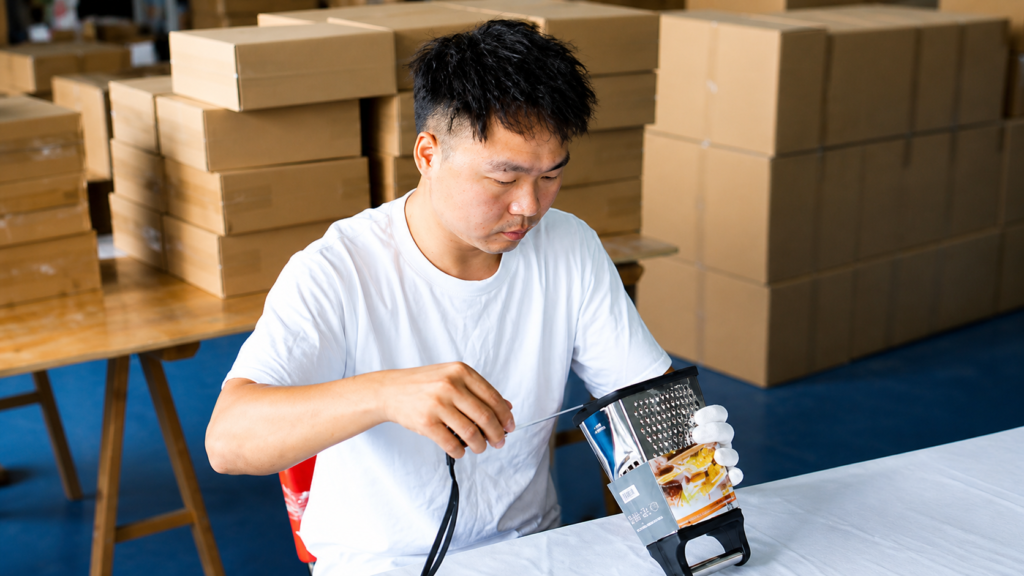
Inspection can be light or detailed depending on the product. A basic check may confirm visible condition, packaging, quantity and barcode accuracy. A deeper check may include functional testing, measurements, photos, sample review or AQL-style quality control.
Fyllhub can support China product inspection as part of a broader fulfillment workflow.
Inventory storage
Storage in China helps brands keep stock close to production. This can be useful for seasonal products, test launches, multiple marketplaces or backup inventory. A warehouse should track inventory by SKU and provide clear stock updates.
See Fyllhub's China warehouse services for storage and inventory support.
Pick and pack fulfillment
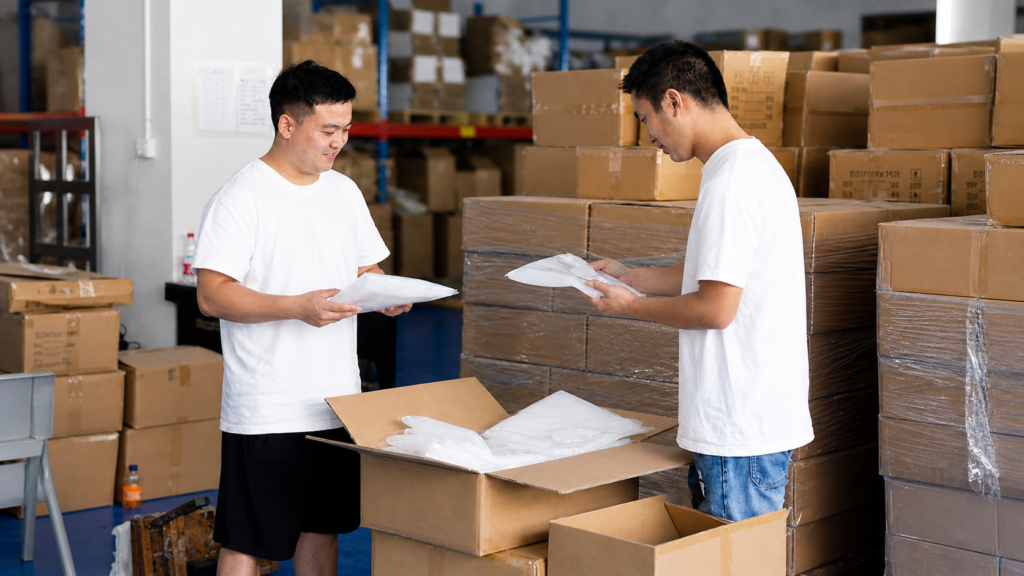
When an order is placed, the fulfillment center picks the correct SKU, checks the order details, packs the item and prepares the shipment. For ecommerce brands, accuracy matters as much as speed. Wrong items create refunds, bad reviews and support tickets.
Custom packaging
Many private label and DTC brands want more than a plain shipping bag. They may need branded boxes, thank-you cards, inserts, stickers, protective material or special kitting. China fulfillment is useful because packaging materials can often be sourced near the manufacturer.
Kitting and bundling
Bundles, sets and multipacks can increase average order value, but they need careful preparation. A fulfillment center can combine multiple products, apply bundle labels and ensure each kit matches the store or marketplace listing.
Amazon FBA prep
Many brands use a China fulfillment center to prepare a portion of stock for Amazon FBA while keeping another portion for Shopify or WooCommerce orders. This may include FNSKU labeling, poly bagging, carton labels, inspection and consolidation.
If Amazon is part of your sales mix, review Fyllhub's Amazon FBA prep service.
Global shipping and DDP routes
Shipping from China can involve postal routes, express delivery, air freight, sea freight, private line delivery or DDP shipping. A good fulfillment partner should help choose a route based on product, destination, delivery promise and cost.
For cross-border shipping support, see Fyllhub's China freight forwarder and DDP shipping service.
Platform Use Cases
Shopify fulfillment from China
Shopify brands often need control over branding, packaging and customer experience. A China fulfillment center can support custom packaging and direct global delivery while syncing orders from Shopify. This is useful when products are made in China and customers are spread across several countries.
WooCommerce fulfillment from China
WooCommerce sellers often need flexible workflows because stores vary widely in plugins, payment methods and order rules. A fulfillment center should be able to receive order data, match SKUs, pack correctly and return tracking information.
Amazon seller fulfillment
Amazon sellers can use China fulfillment for FBA prep, FBM orders, backup stock and supplier consolidation. This prevents all inventory from being locked into Amazon at once.
Crowdfunding fulfillment
Kickstarter and Indiegogo campaigns often manufacture in China and ship rewards globally. A China fulfillment center can receive finished goods, kit rewards, pack backer orders and ship by country or region.
Fyllhub also supports crowdfunding fulfillment for campaign logistics.
Benefits of China Order Fulfillment
Better supplier control
When inventory is checked near the factory, supplier issues can be addressed before expensive international shipping. This is one of the biggest advantages of China fulfillment.
Lower inventory risk
Brands do not always need to import all stock at once. They can hold inventory in China and ship by demand, sales channel or destination.
More flexible channel strategy
The same stock pool can support Shopify, WooCommerce, Amazon FBA, crowdfunding and wholesale. This flexibility helps brands avoid overcommitting to one channel.
Custom packaging options
Packaging can be sourced, assembled and tested near production. This is helpful for private label brands that care about presentation.
Easier product testing
New products can be tested with smaller inventory batches before committing to large imports or domestic storage.
Consolidated operations
Sourcing, inspection, storage, fulfillment and freight can be coordinated by one partner. This reduces the number of vendors the brand needs to manage.
Risks and How to Reduce Them
China fulfillment also has risks. The key is choosing the right partner and setting clear expectations.
Delivery time expectations
Direct shipping from China may not match domestic two-day delivery. Be clear with customers about delivery timelines and choose routes that fit your brand promise.
Tracking quality
Some routes provide better tracking than others. Ask how tracking updates are provided and whether they sync back to your store.
Duties and taxes
Cross-border shipments can involve customs, duties and taxes. DDP shipping can simplify the customer experience, but you need clear cost visibility before choosing a route.
Product restrictions
Battery products, liquids, cosmetics, magnets and oversized goods may have shipping restrictions. Confirm rules before launch.
Communication gaps
A fulfillment partner should provide clear communication, issue reports and response times. Poor communication can erase the benefits of a lower-cost operation.
How to Choose a China Fulfillment Partner
Before choosing a provider, ask:
- Where is the warehouse located?
- Can you receive products from multiple suppliers?
- Do you provide receiving reports and photos?
- Can you inspect products before storage?
- Can you integrate with Shopify or WooCommerce?
- Can you support Amazon FBA prep?
- Can you store inventory by SKU?
- Can you handle custom packaging and inserts?
- Which countries do you ship to?
- Do you support DDP shipping?
- How do you handle damaged or incorrect supplier deliveries?
- What are the storage, pick, pack and shipping fees?
- Can you provide references, case studies or warehouse photos?
The right partner should be able to explain the workflow clearly. If the process is vague before you start, it will probably become more stressful once orders begin.
How Fyllhub Helps Ecommerce Brands
Fyllhub helps ecommerce brands use China as a practical fulfillment base, not just a production location. The team can coordinate supplier receiving, quality checks, inventory storage, order packing, Amazon FBA prep, sourcing support and global shipping.
Fyllhub can help with:
- China ecommerce fulfillment
- Amazon FBA prep service
- China sourcing
- China warehouse services
- China freight forwarding and DDP shipping
- Crowdfunding fulfillment
This combined workflow is useful for brands that want fewer disconnected vendors and more visibility between factory production and customer delivery.
Cost Factors in China Fulfillment
Fulfillment pricing is usually built from several smaller costs rather than one flat fee. Brands should understand each part before comparing providers. A low pick-and-pack fee may look attractive, but the total cost can change when storage, packaging materials, labeling, inspection, customs handling and shipping are included.
Common cost factors include:
- Number of SKUs
- Monthly storage volume
- Number of orders
- Units per order
- Packaging requirements
- Kitting or bundling work
- Inspection scope
- Shipping destination
- Product weight and dimensions
- Delivery speed
- DDP or non-DDP route selection
The best way to compare China fulfillment partners is to build a sample order profile. For example, estimate the cost for 500 monthly Shopify orders to the United States, 200 Amazon FBA units prepared for shipment and 100 units held in storage for future replenishment. This gives you a realistic view of monthly logistics cost instead of judging only one line item.
It is also important to include the value of risk reduction. If a fulfillment center catches supplier defects before export, prevents Amazon receiving problems or helps split inventory across channels, the savings may be larger than the visible warehouse fee. Good fulfillment is not only about moving boxes. It protects margin, customer experience, cash flow and the brand reputation you are trying to build in each market.
FAQ
What is a China fulfillment center?
A China fulfillment center is a warehouse and operations team that receives products in China, stores inventory, prepares orders, packs shipments and coordinates delivery to customers, marketplaces or other warehouses.
Is China fulfillment good for Shopify brands?
Yes. China fulfillment can work well for Shopify brands that manufacture or source products in China and ship to customers in several countries. It can support custom packaging, direct delivery and flexible inventory control.
Can a China fulfillment center ship to Amazon FBA?
Yes. Many China fulfillment centers can prepare and ship inventory to Amazon FBA. This can include inspection, FNSKU labeling, carton labels, consolidation and freight coordination.
What is the difference between China fulfillment and a China 3PL?
The terms often overlap. A China 3PL usually provides third-party logistics services such as warehousing, fulfillment and shipping. A China fulfillment center is the physical and operational location where inventory is stored, packed and shipped.
Does China fulfillment support DDP shipping?
Some providers support DDP shipping, where duties and taxes are handled before delivery to the customer. Fyllhub can support China freight forwarding and DDP shipping options depending on product type and destination.
How do I get started with Fyllhub?
Share your product details, supplier location, target countries, sales channels and order volume. Fyllhub can recommend a fulfillment workflow and quote based on your needs.
Final Thoughts
A China fulfillment center is most valuable when it connects the early and late stages of your ecommerce supply chain. It gives you a checkpoint near suppliers, a flexible inventory base and a way to serve multiple markets without committing every unit to one country or one marketplace.
For brands sourcing from China, this can reduce risk, simplify operations and improve control over quality, packaging and delivery. The result is not just cheaper shipping. It is a more connected workflow from supplier to customer.
If you want to explore whether this model fits your brand, visit Fyllhub's China ecommerce fulfillment service or request a custom quote.




 Chat on WhatsApp