
WooCommerce Fulfillment China: Storage, Packing and Shipping
WooCommerce Fulfillment China is a logistics option for online stores that source, manufacture or consolidate products in China and need a reliable way to ship customer orders worldwide. WooCommerce gives sellers strong control over their storefront, checkout, product catalog and customer experience, but the shipping operation behind the store still has to be accurate, scalable and easy to manage.
For many WooCommerce brands, the hardest part is not building the website. The harder part is receiving goods from Chinese suppliers, storing inventory, packing the correct items, choosing shipping methods, updating tracking numbers and keeping customers informed. When those tasks are handled manually through suppliers, spreadsheets and random courier accounts, fulfillment can become messy as soon as order volume grows.
This guide explains how WooCommerce fulfillment in China works, when it makes sense, how it differs from dropshipping, what services sellers should expect from a fulfillment partner and how Fyllhub can support China ecommerce fulfillment for WooCommerce sellers that want a cleaner route from supplier to customer.
What Is WooCommerce Fulfillment China?
WooCommerce Fulfillment China means using a fulfillment partner in China to receive inventory, store SKUs, pick products, pack customer orders and arrange shipping for orders placed through a WooCommerce store. The fulfillment partner may also help with supplier pickup, basic inspection, product labeling, custom packaging, kitting, DDP shipping and freight forwarding.
The model is especially useful when products are made or sourced in China. Instead of moving inventory from a Chinese supplier to a warehouse in another country before any customer order is shipped, sellers can keep some inventory near the production source and ship orders directly from China when that is the most practical route.
This can support several types of WooCommerce businesses:
- Direct-to-consumer brands selling globally
- Niche ecommerce stores with long-tail SKUs
- Product launch stores testing demand
- Replacement part and accessory stores
- Crowdfunding brands after campaign delivery
- Hybrid sellers using WooCommerce plus Amazon, wholesale or retail channels
The goal is not simply to outsource packing. The goal is to create a fulfillment workflow that connects inventory, shipping, tracking and customer expectations.
Why WooCommerce Sellers Need a Fulfillment Plan
WooCommerce is flexible because it is built on WordPress and can be extended with many plugins, payment tools, shipping tools and custom workflows. That flexibility helps brands build unique stores, but it also means fulfillment is rarely automatic. Sellers have to decide how orders move from the website to the warehouse, how inventory is counted, how tracking numbers are returned and how shipping rules are communicated to customers.
Without a fulfillment plan, common problems appear quickly:
- Orders are exported manually and mistakes happen.
- Suppliers ship late or use inconsistent packaging.
- Tracking numbers are delayed.
- Customers ask for delivery updates the seller cannot answer.
- Inventory counts do not match real warehouse stock.
- New SKUs are launched without clear packing instructions.
- International shipping costs are guessed instead of planned.
A China fulfillment center can reduce these problems by creating a defined receiving, storage, packing and shipping process. This is important for WooCommerce stores because customer trust is built through the whole buying experience, not only the product page.
WooCommerce Fulfillment China vs Supplier Dropshipping
WooCommerce sellers sometimes begin with supplier dropshipping because it looks simple. A customer orders from the store, the seller forwards the order to a supplier and the supplier ships the product. This can work for testing a market, but it often becomes weak when the brand needs consistency.
Supplier dropshipping may create issues with packaging, product checks, inventory visibility, shipping speed and communication. The supplier's priority may be production, not customer-level fulfillment. If the supplier runs out of stock, changes packaging, ships a damaged item or delays tracking, the seller absorbs the customer complaint.
WooCommerce Fulfillment China is more controlled. Inventory is received into a fulfillment workflow, SKUs are recorded, packing rules are agreed in advance and orders are shipped according to the seller's process. The seller can use branded packaging, combine items from multiple suppliers, prepare bundles and choose different shipping methods by destination.
For a WooCommerce store that wants to look like a real brand, this control matters. Packaging, tracking and delivery communication are part of the customer experience.
When China Fulfillment Makes Sense
China fulfillment is not the correct answer for every WooCommerce order, but it is useful in several common situations.
Your products are made in China
If most inventory already starts in China, keeping some stock near suppliers can reduce extra handling. A fulfillment partner can receive cartons from factories, check basic quantities and prepare orders before bulk international freight is needed.
You sell to customers in multiple countries
WooCommerce stores often sell beyond one domestic market. A brand may be based in the United States but receive orders from Canada, the United Kingdom, Australia, Europe and Asia. Shipping every order through one domestic warehouse can create unnecessary routing for international customers.
You have many low-volume SKUs
Long-tail SKUs can be expensive to store in multiple regional warehouses. A China fulfillment center can hold lower-volume products and ship them when orders arrive, while bestsellers may still be stocked locally.
You need kitting or custom packing
WooCommerce stores often sell bundles, refill packs, gift boxes, accessories, variants and special product combinations. A fulfillment partner can prepare kits, add inserts, use custom packaging and follow packing instructions.
You are testing a new product
Before sending a large amount of inventory to a local warehouse, sellers may test demand from China. This can reduce the risk of overstocking a product that has not yet proven itself.
When a Regional Warehouse Is Better
Some WooCommerce sellers should use a regional warehouse for part of their inventory. If the store promises very fast delivery in one country, local storage is usually needed. If the product is heavy, oversized or expensive to ship one unit at a time from China, bulk freight to a domestic warehouse may be more efficient. If returns are frequent, local processing may also be easier.
Many brands use a hybrid model. Bestselling products are stocked in the United States, the United Kingdom, Europe, Canada or Australia. New products, slow-moving variants, replacement parts, samples and international orders remain in China fulfillment. This approach gives the seller more flexibility than choosing only one warehouse location.
The right model depends on order volume, destination mix, shipping promise, product dimensions, margins and customer expectations.
Core Services in a WooCommerce China Fulfillment Workflow
A strong fulfillment partner should support the full flow from supplier receiving to customer delivery.
Supplier pickup and receiving
The fulfillment partner receives products from suppliers or arranges pickup when needed. Receiving should include carton counts, basic arrival records and SKU identification. If the seller uses several suppliers, consolidation into one fulfillment location can simplify operations.
Basic inspection and product checks
Before products enter sellable stock, sellers may request basic checks. This can include visual checks, quantity checks, packaging checks, barcode checks or variant checks. For more detailed quality control, sellers can use a dedicated inspection workflow similar to an Amazon FBA inspection before goods are shipped.
Inventory storage
Inventory should be stored by SKU, variant or batch. The seller needs visibility into what is available, what is reserved, what is damaged and what needs replenishment. Clean inventory control helps prevent overselling in WooCommerce.
Pick and pack fulfillment
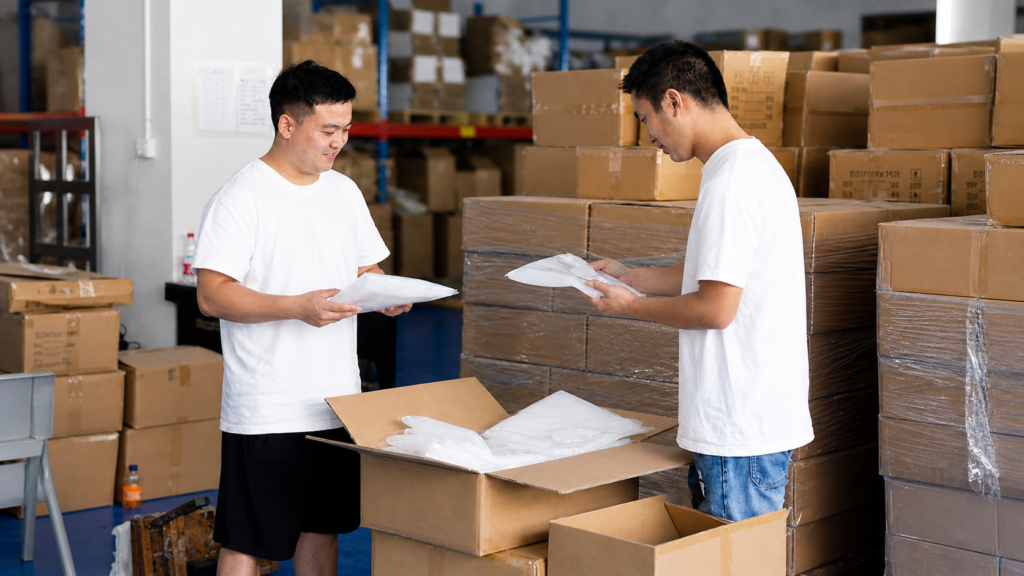
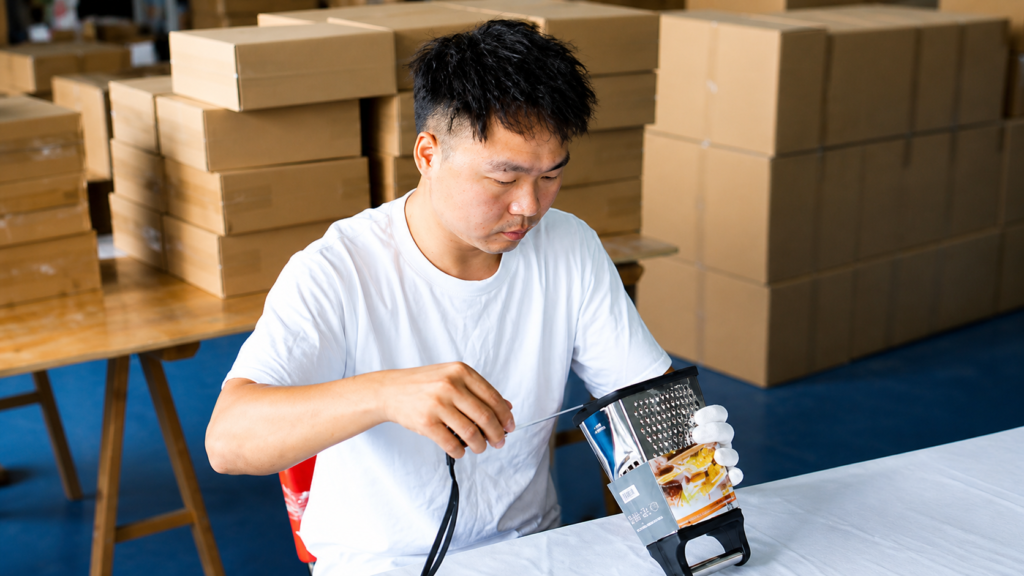
When an order is ready, the warehouse picks the correct item, checks quantity, packs the order and prepares the shipment. Packing rules should be documented clearly, especially for fragile items, multi-item bundles or branded packaging.
Custom packaging
WooCommerce stores often care about brand presentation. A fulfillment partner can apply custom boxes, mailers, labels, stickers, thank-you cards, product inserts and protective materials. These details should be tested before scaling because packaging affects both cost and customer satisfaction.
Shipping and tracking
Shipping method selection depends on destination, weight, product category, value, delivery promise and cost target. Tracking should be returned to the seller or store workflow quickly so customers can receive updates.
Connecting WooCommerce Orders to Fulfillment
Order flow is one of the most important parts of fulfillment. In a typical process, a customer places an order in WooCommerce, order details are exported or synced to the fulfillment partner, the warehouse checks inventory, the order is packed, a shipping label is created and tracking information is sent back to the seller.
Some WooCommerce sellers begin with CSV exports while order volume is low. Others use plugins, middleware, APIs or order management systems. The right setup depends on the store's tools, volume and technical resources.
No matter which method is used, the data must be clean. The warehouse needs the customer name, full address, phone number when required, email, SKU, variant, quantity, shipping method and any special packing note. If product variants are not named clearly, fulfillment mistakes become more likely.
Address validation is also important. International orders may fail because of missing postal codes, incomplete apartment numbers, unsupported regions or invalid phone numbers. WooCommerce checkout should collect the information required by the shipping methods the seller plans to use.
WooCommerce Fulfillment and DDP Shipping
DDP shipping can be important for WooCommerce stores that sell internationally. DDP means delivered duty paid. In practical ecommerce terms, it usually means duties and import-related charges are included in the shipping arrangement before delivery, so the customer is less likely to receive surprise customs fees.
Surprise fees can hurt a WooCommerce brand. A customer who receives an unexpected duty bill may refuse the package, request a refund or leave a negative review. For some products and destinations, DDP shipping from China can create a cleaner customer promise.
However, DDP must be planned carefully. Product type, declared value, HS code, destination rules, duties, taxes and route availability all matter. A seller should not simply promise "tax included" everywhere without confirming the actual shipping route. The better approach is to work with a fulfillment partner or China freight forwarder to confirm which destinations can be supported reliably.
Fyllhub can help sellers compare direct shipping, DDP shipping, freight forwarding and regional warehouse replenishment so the WooCommerce delivery promise matches real logistics.
Inventory Planning for WooCommerce Stores
Inventory planning is often harder for WooCommerce sellers because every store has its own sales rhythm. Some stores rely on paid ads. Some sell seasonal products. Some have subscription-like reorder behavior. Some have many variants, colors, sizes or accessories.
Start by reviewing SKU-level sales data. Look at average daily sales, campaign peaks, destination countries, production lead time, supplier reliability, packaging time and shipping time. Then decide how much stock should remain in China and how much should be moved to local warehouses.
For new products, sellers may keep smaller batches in China until demand is proven. For products with stable demand, sellers may use China fulfillment for international orders while sending bulk replenishment to regional warehouses. For slow-moving products, China storage can prevent unnecessary local warehousing costs.
Inventory rules should also include reorder points. A fulfillment partner can help store products and ship orders, but the seller still needs to decide when to reorder, how much to produce and which SKUs deserve deeper stock.
Packaging Decisions for WooCommerce Fulfillment
Packaging affects shipping cost, damage rate and brand perception. Before sending inventory to a fulfillment partner, sellers should review product packaging and shipping packaging.
Product packaging should protect the item and show the brand appropriately. Shipping packaging should survive transportation without creating unnecessary dimensional weight. A lightweight product in a large box may cost more to ship than expected. A fragile product in weak packaging may lead to refunds and replacement shipments.
WooCommerce sellers should prepare packing instructions that cover:
- Which box, mailer or protective material to use
- Whether branded inserts are required
- Where to place labels
- How to pack bundles or multi-item orders
- Whether photos are required for special orders
- How to handle damaged packaging
- Whether certain SKUs need extra protection
Clear instructions reduce mistakes. They also help the warehouse train the team and keep packing consistent as order volume grows.
Returns and Customer Service Considerations
Returns are an important part of WooCommerce fulfillment planning. China fulfillment can ship orders worldwide, but return handling should be decided before sales scale. Some brands ask customers to return products to a local address. Some use replacements instead of returns for low-cost products. Some collect photos before authorizing a refund. Some return only defective units to China in batches.
There is no universal answer. The right policy depends on product value, shipping cost, defect rate, destination and customer expectations. What matters is that the return policy on the WooCommerce store matches the real operational process.
Customer service should also understand shipping timelines, tracking status, duty rules and replacement procedures. A fulfillment process is only successful if the customer-facing team can explain it clearly.
SEO and Store Content for WooCommerce Shipping
Fulfillment also affects website SEO and conversion. Customers want to know when they will receive orders, whether duties are included, what happens if a product is damaged and how returns work. Search engines also reward useful, trustworthy content that answers real customer questions.
WooCommerce sellers should create clear shipping pages, returns pages, FAQ sections and product-level delivery notes. If a product ships from China, explain realistic timelines. If some destinations use DDP shipping, explain what that means. If products are custom-packed or inspected before shipping, mention that where relevant.
For Fyllhub, this same principle applies to service SEO. The website should connect service pages with helpful guides such as Shopify fulfillment from China, DDP shipping from China and China fulfillment center planning. These internal links help customers and search engines understand the full logistics offering.
How to Choose a WooCommerce Fulfillment Partner in China
WooCommerce sellers should compare fulfillment partners based on operational fit, not only the lowest pick and pack fee.
Useful questions include:
- Can the partner receive goods from multiple Chinese suppliers?
- Can it support WooCommerce order exports or integrations?
- Can it identify SKUs and variants accurately?
- Can it store branded packaging materials?
- Can it assemble bundles or kits?
- Can it ship to the seller's main customer countries?
- Can it support DDP shipping where needed?
- Can it provide tracking numbers quickly?
- Can it help with freight forwarding, Amazon FBA or wholesale shipments?
- Can it communicate clearly when inventory, packaging or shipping issues appear?
A good partner should make the seller's workflow more predictable. It should help the brand prevent stock errors, shipping confusion and packaging mistakes before they become customer complaints.
Common WooCommerce Fulfillment Mistakes
Using unclear SKU names
WooCommerce stores can have many variants. If SKU names are inconsistent, the warehouse may pick the wrong product. Every variant should have a clear SKU before inventory enters storage.
Promising delivery times before testing routes
Delivery promises should be based on real shipping data. Test the main destinations before displaying firm timelines at checkout or on product pages.
Ignoring product restrictions
Batteries, liquids, cosmetics, magnets and oversized items may need special shipping routes. Always confirm restrictions before accepting international orders.
Forgetting packaging inventory
Branded boxes, inserts and labels are inventory too. If packaging materials run out, the warehouse may be unable to pack orders according to brand standards.
Not planning returns
Returns do not need to be complicated, but they do need a policy. Decide return addresses, refund rules and replacement rules before order volume grows.
How Fyllhub Helps WooCommerce Sellers
Fyllhub helps ecommerce sellers coordinate fulfillment from China across supplier receiving, storage, packing, shipping and related logistics. For WooCommerce brands, this can reduce the manual workload of chasing suppliers, checking inventory, preparing orders and arranging international delivery.
Fyllhub can help with:
- Receiving goods from Chinese suppliers
- Supplier consolidation
- Basic carton and product checks
- Inventory storage
- WooCommerce order fulfillment workflows
- Pick and pack services
- Branded packaging and inserts
- Product kitting and bundles
- DDP shipping coordination
- Freight forwarding from China
- Amazon FBA or regional warehouse replenishment
This is useful for sellers that want more control than supplier dropshipping but are not ready to build their own warehouse operation. A managed fulfillment workflow can help the brand scale more cleanly, especially when orders come from several countries.
If your WooCommerce store sources products from China and needs a dependable fulfillment setup, you can request a custom quote from Fyllhub. Share your SKU count, monthly order volume, customer countries, packaging requirements and supplier locations so the team can recommend a practical workflow.
FAQ
What is WooCommerce Fulfillment China?
WooCommerce Fulfillment China is a logistics setup where a China fulfillment partner receives inventory, stores products, packs WooCommerce orders and ships them to customers or warehouses.
Is WooCommerce fulfillment from China the same as dropshipping?
No. Dropshipping usually depends on a supplier shipping orders directly. WooCommerce fulfillment is more controlled because inventory is stored in a fulfillment workflow with agreed SKU, packing and shipping rules.
Can Fyllhub fulfill WooCommerce orders worldwide?
Fyllhub can help ecommerce sellers arrange China order fulfillment and shipping to many global destinations, depending on product type, destination, shipping method and route availability.
Can I use custom packaging for WooCommerce orders?
Yes. WooCommerce sellers can use custom packaging, inserts, stickers, branded mailers or bundle instructions when those materials are prepared and stored with the fulfillment partner.
Is DDP shipping useful for WooCommerce stores?
DDP shipping can be useful when sellers want duties and import charges handled before delivery. It can reduce surprise fees for customers, but availability depends on product type and destination.
Should I keep all WooCommerce inventory in China?
Not always. Many sellers use a hybrid model, with bestsellers stored in regional warehouses and new products, international orders, spare parts or slower-moving SKUs fulfilled from China.
How do I start WooCommerce fulfillment in China?
Prepare SKU details, supplier addresses, monthly order volume, main destination countries, packaging needs, product restrictions and shipping timelines. Then request a quote from a fulfillment partner.
Final Thoughts
WooCommerce Fulfillment China can help online sellers connect their store, suppliers, inventory and global shipping into a more controlled workflow. For brands that source products in China, it can reduce unnecessary handling, support international customers and create a better alternative to informal supplier dropshipping.
The right setup depends on product type, destination mix, order volume, packaging needs and customer promise. Some products may ship from China. Others may belong in regional warehouses. Some may need DDP shipping, kitting, inspection or special packaging.
Fyllhub can help WooCommerce sellers design that workflow from supplier pickup to customer delivery. To compare options for your store, request a quote from Fyllhub.




 Chat on WhatsApp