
China Order Fulfillment: When to Ship Direct from China
China order fulfillment is a logistics model where ecommerce sellers store products in China, prepare individual orders in a fulfillment center and ship those orders directly to customers, Amazon warehouses, regional 3PLs or business partners. It is especially useful for brands that source or manufacture products in China and sell to customers in several countries.
Many ecommerce sellers start with a simple supply chain: supplier makes the product, seller receives orders and supplier ships packages. That can work for early testing, but it often becomes unreliable as the brand grows. The seller may need better packaging, faster tracking, product checks, supplier consolidation, DDP shipping, inventory visibility and customer service support. At that point, a structured China order fulfillment workflow becomes much stronger than informal supplier shipping.
This guide explains when to ship direct from China, how China order fulfillment works, when a local warehouse may be better, what costs sellers should understand and how Fyllhub can support China ecommerce fulfillment from supplier receiving to customer delivery.
What Is China Order Fulfillment?
China order fulfillment means using a fulfillment partner in China to receive products, store inventory, pick and pack customer orders and arrange shipping. The seller may receive orders from Shopify, WooCommerce, Amazon, TikTok Shop, a marketplace, a crowdfunding campaign or a custom ecommerce site. The fulfillment partner turns those orders into packed shipments.
The process may include:
- Supplier pickup
- Receiving and carton checks
- Product inspection
- SKU setup
- Inventory storage
- Order import or integration
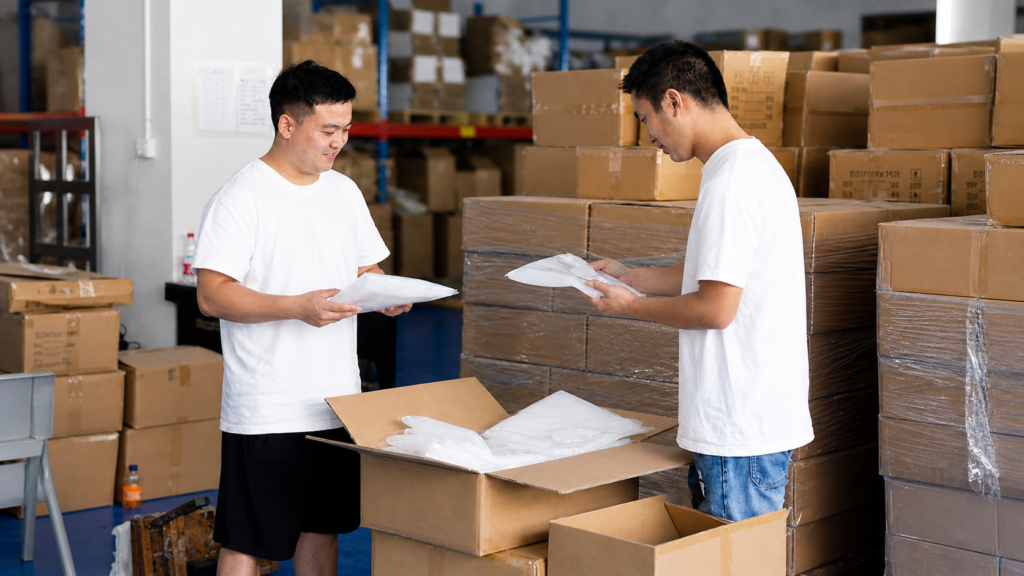
- Pick and pack
- Branded packaging
- Kitting and bundle assembly
- Shipping label creation
- Tracking updates
- DDP shipping coordination
- Freight forwarding to regional warehouses
The main difference from supplier dropshipping is control. In China order fulfillment, the seller can build rules for SKUs, packaging, shipping methods and inventory. The order is not simply handed to a supplier and forgotten.
Why Ecommerce Sellers Use China Order Fulfillment
China is a major sourcing and manufacturing hub for ecommerce products. If the product is already made in China, it can be practical to store some inventory close to the supplier rather than moving every unit through another country before it is sold.
Products start near the fulfillment center
When inventory is produced in China, receiving goods into a China fulfillment center can reduce extra movement. The fulfillment partner can collect goods from suppliers, consolidate several factories and prepare orders before bulk international freight is needed.
Customers are spread across countries
Many online stores sell to buyers in the United States, the United Kingdom, Canada, Australia and Europe at the same time. If all stock is stored in one domestic warehouse, international orders may still travel long distances. Direct fulfillment from China can sometimes be more practical for global orders.
New products need testing
Before a seller commits to a large local warehouse shipment, China order fulfillment can help test a new SKU. The brand can ship smaller batches, study demand and decide later whether to move more inventory to a regional 3PL.
Long-tail SKUs are expensive to store locally
Accessories, spare parts, replacement items, color variants and low-volume products may not justify domestic warehouse storage. Keeping them in China can reduce inventory risk while still allowing customer orders to be fulfilled.
The seller wants more control than dropshipping
China order fulfillment gives sellers more control over packing, inspection, tracking and shipping options than basic supplier dropshipping. That control helps protect brand quality.
China Order Fulfillment vs Dropshipping
Dropshipping is often used to describe any order shipped from a supplier after the customer buys. It can be useful for testing ideas, but it usually gives the seller limited control.
With supplier dropshipping, the supplier may decide packaging, shipping method, dispatch time and tracking quality. The seller may not see the product before it ships. If the supplier changes packaging or runs out of stock, the seller may only learn after customers complain.
China order fulfillment is a more organized model. The seller's inventory is received by a fulfillment partner. SKUs are recorded. Packing rules are agreed. Shipping methods are selected. Tracking is returned in a defined process. The seller can use branded inserts, custom packaging, quality checks and fulfillment rules by SKU or country.
For a brand that wants repeat customers, this matters. Customers do not care whether the delay came from a supplier, warehouse or carrier. They remember the brand experience.
China Order Fulfillment vs Local 3PL
A local 3PL stores inventory closer to the customer, often in the United States, United Kingdom, Europe, Canada or Australia. It can be excellent for fast domestic delivery and high-volume products. But it also requires sending inventory in bulk to that warehouse before orders can be shipped.
China order fulfillment stores products near the source. It can support global direct shipping, product testing, low-volume SKUs, international orders and supplier consolidation.
The choice is not always either-or. Many brands use both:
- Bestselling products in local warehouses
- New SKUs in China fulfillment
- International orders shipped from China
- Replacement parts stored in China
- Amazon FBA inventory prepared and shipped in bulk
- Wholesale replenishment moved through freight forwarding
This hybrid model gives the brand more flexibility and reduces the risk of putting every unit in one location.
When to Ship Direct from China
Direct shipping from China makes sense when it supports the customer's delivery expectation and the seller's margin. It is not only a cost decision. It is a service decision.
Your product is lightweight or compact
Small, light products are often better candidates for direct fulfillment from China. If an item is bulky or heavy, shipping one unit internationally may be expensive, and bulk freight to a local warehouse may be better.
You sell internationally
If customers are spread across several regions, China fulfillment can help serve multiple countries without placing inventory in every market.
You are testing demand
New products can be fulfilled from China while the brand studies sales performance. Once demand is proven, the seller can move bestsellers to regional warehouses.
Your customers accept realistic delivery times
Some products do not require two-day delivery. If the store communicates shipping timelines clearly, direct fulfillment can work well for many categories.
You need supplier consolidation
If products come from several Chinese factories, a China fulfillment center can collect and combine inventory before orders are packed.
When Not to Ship Direct from China
China order fulfillment is not perfect for every order. Sellers should be honest about product economics and customer expectations.
Direct shipping may not be ideal when:
- The product is heavy or oversized.
- The brand promises very fast local delivery.
- The product has strict import restrictions.
- The order value is too low to support tracked shipping.
- Return rates are high and local returns are needed.
- Customers expect domestic carrier delivery.
- The product requires complex compliance documentation.
In these cases, a local 3PL, Amazon FBA, wholesale warehouse or regional fulfillment setup may be better for some inventory.
How China Order Fulfillment Works
A reliable workflow should be planned from supplier handoff to customer delivery.
Supplier pickup and consolidation
The fulfillment partner receives products from one or more suppliers. If suppliers are in different cities, domestic China transport may be needed. Consolidation helps sellers combine inventory from several factories into one fulfillment location.
Receiving and checks
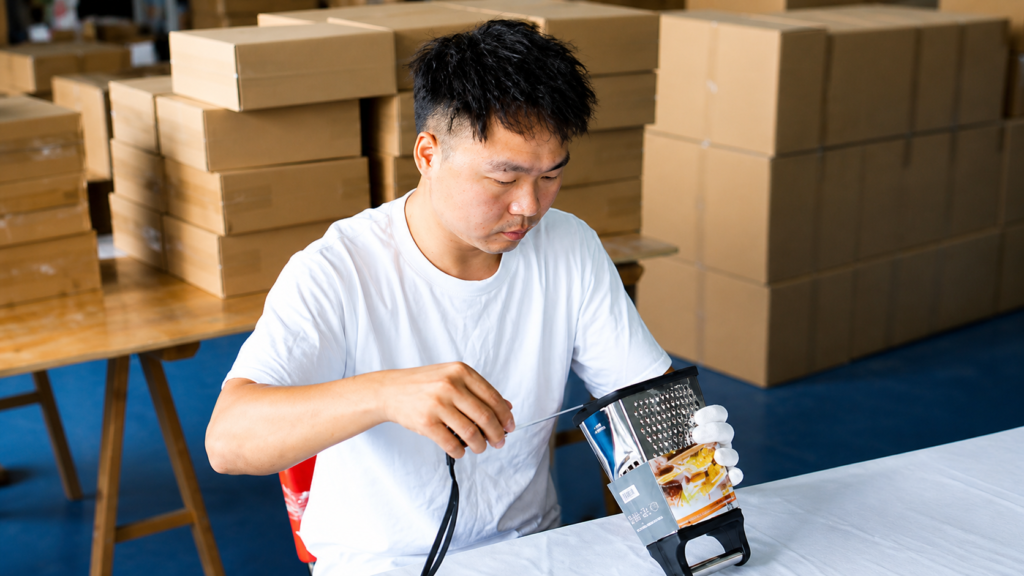
The warehouse checks what arrived. This may include carton count, SKU confirmation, visible damage checks, barcode review and basic packaging checks. For higher-risk orders, sellers may request additional inspection before inventory is stored.
Storage and SKU setup
Products are stored by SKU, variant or batch. Clear SKU setup is critical. If a store sells colors, sizes, bundles or versions, those differences must be visible in the warehouse workflow.
Order import
Orders can be sent to the fulfillment partner through integration, order management software, CSV export or manual batch upload. The order data should include customer name, address, SKU, quantity, shipping method and any packing note.
Pick and pack
The warehouse selects the correct item, checks quantity and packs the order. Packing rules may include product protection, branded inserts, gift notes, bundle assembly or photo checks for special orders.
Shipping and tracking
The fulfillment partner selects the shipping method based on destination, product, value, weight and delivery promise. Tracking should be returned to the seller or store system quickly.
Exceptions and customer service
If an address is incomplete, a product is out of stock or a route has restrictions, the fulfillment partner should communicate early. Customer support needs accurate information to prevent refunds and complaints.
DDP Shipping and China Order Fulfillment
DDP shipping can be important for direct orders from China. DDP means delivered duty paid. In ecommerce terms, it usually means duties and import charges are handled in the shipping arrangement before delivery, so the customer is less likely to receive a surprise customs bill.
This can improve the customer experience, especially for buyers in countries where import fees are common. A customer who receives a surprise fee may refuse delivery or blame the brand.
DDP is not always available or cost-effective. Product category, declared value, HS code, destination country, taxes, duties and route rules all matter. Sellers should work with a fulfillment partner or China freight forwarder before promising duty-paid delivery on the storefront.
Fyllhub can help sellers compare DDP shipping, direct parcel shipping, bulk freight and regional warehouse replenishment so the order fulfillment model fits the real shipping route.
China Order Fulfillment for Shopify and WooCommerce
Shopify and WooCommerce sellers often use China order fulfillment to create a more controlled alternative to supplier shipping.
A Shopify fulfillment China setup can connect store orders with warehouse packing, branded packaging and global delivery. This is useful for paid-ad-driven brands, product launch stores and international sellers.
A WooCommerce fulfillment China workflow may require more attention to plugins, SKU naming, order exports and custom checkout fields. Because WooCommerce is flexible, the order data format must be clear before fulfillment begins.
For both platforms, sellers should prepare accurate SKU lists, product weights, packaging rules, customer countries and delivery expectations. The cleaner the store data, the cleaner the warehouse process.
Amazon FBA and China Order Fulfillment
China order fulfillment can also support Amazon sellers. Some sellers use Amazon FBA for marketplace orders while using China fulfillment for direct-to-consumer orders, replacement parts, samples or non-Amazon channels.
FBA inventory may still need preparation in China before it reaches Amazon. This can include inspection, labeling, carton checks, shipment consolidation and freight forwarding. The seller may use a broader workflow that includes Amazon FBA prep service, China warehouse storage and direct ecommerce fulfillment.
This is useful for multichannel brands. The same product may need to serve Amazon, Shopify, wholesale and customer support replacements. A China fulfillment workflow can help allocate inventory between channels.
Inventory Planning for China Order Fulfillment
Inventory planning determines whether direct fulfillment works smoothly. If stock is too low, orders wait. If stock is too high, cash is trapped. If stock is in the wrong country, shipping becomes expensive or slow.
Sellers should review:
- Average daily sales by SKU
- Destination countries
- Product weight and dimensions
- Production lead time
- Supplier reliability
- Seasonal demand
- Shipping cost by route
- Delivery promise by market
- Local warehouse costs
- Return rates
For new SKUs, smaller batches in China can reduce risk. For proven products, local warehouses may support faster delivery. For slow-moving SKUs, China storage may be more efficient. The best plan should use order data instead of guesswork.
Packaging and Kitting for Direct Orders
Direct shipping from China does not have to feel generic. Sellers can prepare branded packaging, inserts, stickers, instruction cards, protective materials and bundles.
Packaging should balance brand experience with shipping cost. Oversized packaging can increase dimensional weight. Weak packaging can cause damage. Too many inserts can create packing complexity. The best packaging is protective, efficient and aligned with the customer promise.
Kitting can also be handled in China. This is useful for:
- Product bundles
- Gift sets
- Influencer boxes
- Crowdfunding rewards
- Accessory packs
- Replacement kits
- Subscription-style packs
The fulfillment partner needs clear instructions for each kit, including SKU components, packing order, label rules and quality checks.
Costs to Understand
China order fulfillment costs may include more than one line item. Sellers should understand the full cost before comparing quotes.
Common cost categories include:
- Supplier pickup
- Receiving
- Storage
- SKU setup
- Pick and pack
- Packaging materials
- Kitting
- Product checks
- Shipping
- DDP handling where relevant
- Returns or replacements
- Special projects such as relabeling
The cheapest quote is not always the best option. A low fulfillment fee can become expensive if tracking is weak, packaging is poor or orders are delayed. Sellers should compare the total operating cost, including customer service workload and replacement risk.
Common China Order Fulfillment Mistakes
Using supplier shipping for too long
Supplier shipping may be fine at the start, but it often becomes inconsistent as the brand grows. A fulfillment workflow gives more control.
Not testing shipping routes
Sellers should test key countries before promising delivery times. Real tracking data is better than estimated timelines.
Ignoring SKU and variant details
Wrong SKU setup leads to wrong shipments. Colors, sizes, versions and bundles must be clearly labeled.
Forgetting packaging inventory
Branded mailers, inserts and labels need stock control too. If packaging materials run out, the brand experience changes.
Promising DDP everywhere
DDP shipping should be confirmed by destination and product category. Do not promise duty-paid delivery unless the route supports it reliably.
No return plan
International returns can be expensive. Decide return addresses, refund rules and replacement policies before scaling.
How to Choose a China Order Fulfillment Partner
The right fulfillment partner should fit the seller's product, channel and customer promise. Price matters, but process quality matters just as much.
Ask these questions:
- Can you receive goods from multiple Chinese suppliers?
- Can you consolidate inventory before fulfillment?
- Can you perform basic product or carton checks?
- Can you manage SKU variants and bundles?
- Can you support branded packaging?
- Can you ship to our main customer countries?
- Can you offer DDP shipping options where suitable?
- Can you support Shopify, WooCommerce or marketplace workflows?
- Can you return tracking quickly?
- Can you help with freight forwarding or local warehouse replenishment?
- How do you handle damaged goods, address issues and out-of-stock orders?
A good partner should help prevent problems before they reach the customer. Clear communication, stable procedures and honest route recommendations are valuable.
How Fyllhub Helps With China Order Fulfillment
Fyllhub helps ecommerce brands build China order fulfillment workflows that connect supplier receiving, warehouse storage, packing, shipping and related logistics. This is useful for sellers that source products from China and want more control than supplier dropshipping.
Fyllhub can help with:
- Supplier pickup and consolidation
- China fulfillment center storage
- Basic carton and product checks
- Inventory organization
- Pick and pack order fulfillment
- Branded packaging and inserts
- Kitting and bundle assembly
- Shopify order fulfillment
- WooCommerce order fulfillment
- DDP shipping coordination
- China freight forwarding
- Amazon FBA and regional warehouse replenishment
With this type of workflow, sellers can decide which orders ship direct from China, which products move to local warehouses and which SKUs need special handling. That flexibility can improve cost control and customer experience.
If your ecommerce brand sources products in China and needs a dependable order fulfillment process, you can request a custom quote from Fyllhub. Share your product type, monthly order volume, main customer countries, supplier locations, packaging requirements and delivery goals.
FAQ
What is China order fulfillment?
China order fulfillment is a logistics process where products are stored in China, packed after customer orders are received and shipped directly to customers, warehouses or sales channels.
Is China order fulfillment the same as dropshipping?
No. Dropshipping usually relies on a supplier to ship orders directly. China order fulfillment is more controlled because inventory is stored, packed and shipped through an agreed fulfillment workflow.
When should ecommerce sellers ship direct from China?
Direct shipping from China can make sense for lightweight products, global customers, new product testing, long-tail SKUs, replacement parts and orders where the delivery promise supports international shipping.
Can China order fulfillment include DDP shipping?
Yes. Some China order fulfillment workflows can include DDP shipping, where duties and import charges are handled before delivery. Availability depends on product type, value and destination.
Should I use China fulfillment or a local 3PL?
Many brands use both. Local 3PLs can be better for domestic bestsellers and fast delivery, while China fulfillment can support global orders, new SKUs, slow-moving products and supplier consolidation.
Can Fyllhub fulfill Shopify and WooCommerce orders from China?
Fyllhub can help ecommerce sellers build fulfillment workflows for Shopify, WooCommerce and other channels, depending on SKU setup, order data, packaging needs and shipping destinations.
How do I start China order fulfillment?
Prepare SKU details, supplier addresses, product weights, packaging rules, monthly order volume, customer countries and delivery expectations. Then request a quote from a China fulfillment partner.
Final Thoughts
China order fulfillment can help ecommerce brands move from informal supplier shipping to a more controlled logistics workflow. For sellers that source from China, it can connect supplier pickup, inventory storage, packing, shipping, tracking and customer service into one clearer process.
The best fulfillment strategy is not always only China-based or only local. Many brands use a hybrid approach: local warehouses for bestsellers, China fulfillment for international orders, new SKUs and long-tail products, and freight forwarding for bulk replenishment.
Fyllhub can help design that balance. To explore a fulfillment setup for your products, request a quote from Fyllhub.




 Chat on WhatsApp