
China Warehouse Services for Ecommerce Inventory
China warehouse services help ecommerce and Amazon sellers store, organize, prepare and ship inventory close to the source of production. For brands that source products from Chinese suppliers, a warehouse in China can become the operational checkpoint between factory production and customer delivery, Amazon FBA replenishment, regional 3PL storage or wholesale distribution.
Without a reliable warehouse process, sellers often rely on factories to hold cartons, apply labels, arrange shipping and answer inventory questions. That may work for a short time, but it can become risky when the business uses several suppliers, multiple SKUs, custom packaging, Amazon FBA requirements, Shopify orders, WooCommerce orders or international shipping routes. A dedicated warehouse service gives the seller more control before goods leave China.
This guide explains how China warehouse services work, which sellers need them, what services to compare, how warehousing connects with fulfillment and FBA prep, and how Fyllhub can support China warehouse services for ecommerce inventory.
What Are China Warehouse Services?
China warehouse services are logistics services that store and manage inventory in China before the products are shipped to customers, Amazon warehouses, local 3PLs or other destinations. These services can be simple, such as short-term carton storage, or more involved, such as SKU management, labeling, kitting, repacking and order fulfillment.
Common China warehouse services include:
- Supplier receiving
- Carton count checks
- SKU organization
- Short-term storage
- Long-term storage
- Inventory reporting
- Basic product checks
- Amazon FBA prep
- Labeling and relabeling
- Repacking
- Kitting and bundling
- Supplier consolidation
- Pick and pack fulfillment
- Freight handoff
- DDP shipping coordination
The right service depends on the seller's sales channels, product type, order volume and shipping plan.
Why Ecommerce Sellers Use Warehousing in China
Many ecommerce products are manufactured in China. If inventory already begins there, using a China warehouse can reduce unnecessary handling and give the seller time to organize products before international shipping.
Inventory starts near suppliers
When goods are produced in China, a local warehouse can receive products from suppliers quickly. This can be useful when suppliers are in different cities or when products need to be consolidated before shipment.
Sellers need a neutral checkpoint
Factories are not always the best place to manage ecommerce logistics. A warehouse can act as a neutral checkpoint where inventory is counted, organized, labeled and prepared according to the seller's instructions.
Amazon FBA requires preparation
Amazon has strict labeling and carton rules. A China warehouse can help sellers apply FNSKU labels, carton labels, bundle labels and other prep requirements before freight to Amazon begins.
Direct-to-customer brands need flexible storage
Shopify and WooCommerce sellers may not want to send every SKU to a local warehouse immediately. China warehouse storage can support international orders, new product tests, replacement parts and long-tail inventory.
Freight planning becomes easier
When products are stored and organized in one place, sellers can make better decisions about air freight, sea freight, DDP shipping, Amazon replenishment and regional warehouse transfers.
China Warehouse vs China 3PL
A China warehouse stores inventory. A China 3PL usually provides warehouse storage plus additional logistics services such as fulfillment, labeling, kitting, order processing and freight coordination. In practice, the terms can overlap because many warehouse providers offer 3PL services.
The distinction matters because ecommerce sellers usually need more than storage space. A seller may need products checked, cartons relabeled, bundles assembled, orders packed or shipments consolidated. A basic warehouse may not support those tasks.
When comparing providers, ask what is included:
- Is the service only storage?
- Can the warehouse receive products from multiple suppliers?
- Can it label products for Amazon FBA?
- Can it pack individual ecommerce orders?
- Can it assemble bundles?
- Can it coordinate shipping?
- Can it provide inventory reports?
If the seller needs more than passive storage, a warehouse with 3PL capability is usually a better fit.
China Warehouse vs Local Warehouse
A local warehouse is closer to customers in a specific market, such as the United States, the United Kingdom, Canada, Australia or Europe. It can support faster domestic delivery, local returns and high-volume replenishment. A China warehouse is closer to suppliers and can support inventory control before products leave China.
Both can be useful. The best setup often combines them.
A seller may use China warehouse services for:
- Supplier consolidation
- New product testing
- FBA prep
- Long-tail SKU storage
- International direct shipping
- Replacement parts
- Samples and influencer kits
- Freight staging
The same seller may use a local warehouse for:
- Domestic bestsellers
- Fast delivery promises
- Local returns
- Subscription products
- High-volume SKUs
- Retail replenishment
This hybrid approach helps sellers balance speed, cost and inventory risk.
Core China Warehouse Services to Compare
Not every provider offers the same operational support. Sellers should compare the actual workflow they need.
Supplier receiving
The warehouse receives goods from suppliers and records arrival information. This may include supplier name, SKU, carton count, gross weight, dimensions and visible damage notes. Receiving is the first step in inventory control.
Carton and quantity checks
Basic checks can confirm whether the number of cartons received matches the expected shipment. This does not replace full inspection, but it helps catch obvious issues before goods move forward.
SKU organization
Products should be organized by SKU, variant, batch or channel. Poor SKU setup can lead to wrong shipments, wrong labels and inventory confusion.
Storage
Storage may be short-term or long-term. Short-term storage is useful while sellers wait for all supplier goods to arrive. Long-term storage can support slow-moving SKUs, replacement parts or international order fulfillment.
Inventory reporting
Sellers need visibility into what is stored, what has been shipped, what is damaged and what needs replenishment. Even simple reports can reduce confusion.
Labeling and relabeling
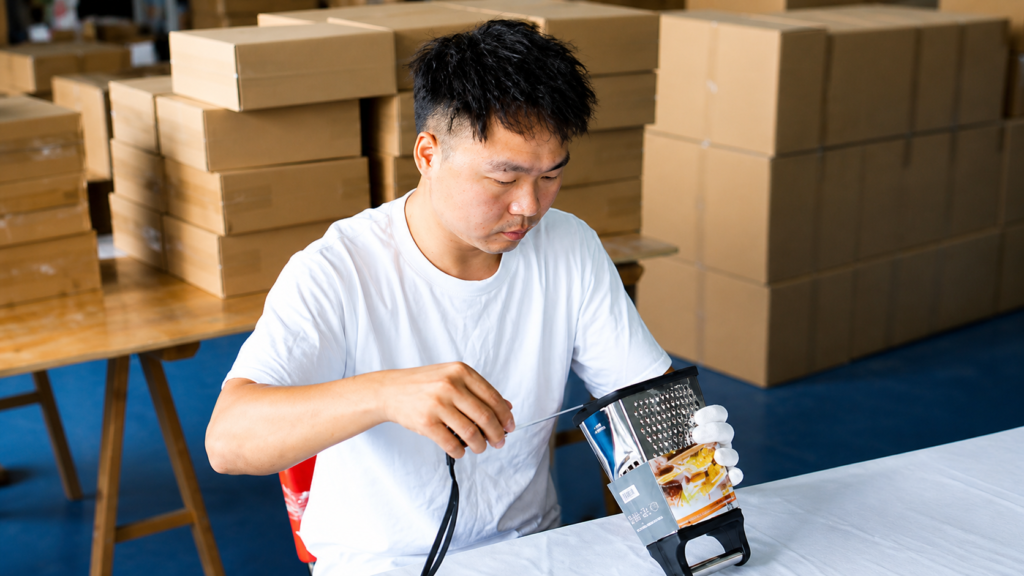
Warehouse teams can apply product labels, carton labels, FNSKU labels, warning labels and bundle labels. Relabeling is common when suppliers apply the wrong label or when Amazon shipment details change.
Repacking
Products may need stronger cartons, smaller cartons, protective material, branded packaging or shipping-ready packaging before outbound movement.
Kitting and bundling
Warehouse services can combine multiple components into one sellable unit. This is useful for bundles, gift sets, multipacks, influencer kits and crowdfunding rewards.
Shipping handoff
The warehouse can hand goods to parcel carriers, freight forwarders, Amazon FBA routes or regional warehouse partners. This is where warehouse operations connect with freight execution.
China Warehouse Services for Amazon FBA
Amazon sellers often need warehouse services in China before inventory goes to Amazon. This is especially true when suppliers are unfamiliar with Amazon requirements or when multiple factories are involved.
Warehouse services can support:
- Product receiving
- Carton checks
- FNSKU labeling
- Carton label application
- Poly bagging
- Suffocation labels
- Bundle labels
- Repacking
- Shipment consolidation
- Carton measurement
- Pallet preparation
- Freight handoff
Fyllhub's Amazon FBA prep service in China can help sellers prepare inventory before it leaves China. This can reduce the risk of Amazon receiving delays, labeling errors and avoidable prep problems.
China Warehouse Services for Supplier Consolidation
Many sellers use several suppliers for one product line. One supplier may produce the main product, another may produce packaging, another may produce an accessory and another may print inserts. A warehouse can receive these components and consolidate them before shipping.
Amazon FBA consolidation is especially useful when inventory from several suppliers needs to become one outbound shipment. Consolidation can reduce freight waste, simplify shipment planning and create an opportunity for checks before inventory leaves China.
For consolidation, sellers should provide:
- Supplier contacts
- Expected delivery dates
- SKU details
- Carton counts
- Product dimensions
- Bundle instructions
- Label files
- Destination requirements
- Target shipping date
Clear instructions help the warehouse organize incoming goods and avoid mixing SKUs or shipment plans.
China Warehouse Services for Ecommerce Fulfillment
Warehouse services can also support direct-to-customer ecommerce fulfillment. A seller may store inventory in China and ship individual orders to customers worldwide. This is useful for products sourced in China, international order coverage, new SKU testing and long-tail inventory.
A China warehouse can support China order fulfillment by storing products, picking orders, packing items, applying labels and handing shipments to parcel or DDP routes.
This can be useful for:
- Shopify sellers
- WooCommerce sellers
- Crowdfunding campaigns
- Product launch stores
- Replacement part sellers
- Accessory brands
- Multichannel Amazon sellers
- International ecommerce stores
For direct fulfillment, the warehouse needs accurate order data, clear SKU names, packing rules and shipping method instructions.
Storage Strategy for Ecommerce Inventory
Inventory should not be stored randomly. Sellers should decide which products belong in China, which should move to local warehouses and which should go directly to Amazon.
China warehouse storage may be a good fit for:
- New products under testing
- Slow-moving SKUs
- Spare parts
- Accessories
- Product variants
- International order inventory
- Bundle components
- Samples
- Packaging materials
- FBA replenishment waiting for shipment
Local warehouse storage may be better for fast-moving domestic products, urgent delivery promises and high-volume SKUs. Amazon FBA may be better for marketplace orders where Amazon handles customer delivery.
The best strategy uses data. Review sales by SKU, destination country, production lead time, storage cost, shipping cost and delivery promise.
Inventory Control and Reporting
Inventory control is one of the most important parts of China warehouse services. Sellers should know what is available, what is reserved, what is damaged and what has shipped.
Useful inventory records include:
- SKU name
- Product description
- Variant
- Quantity received
- Quantity available
- Quantity reserved
- Quantity damaged
- Quantity shipped
- Supplier source
- Batch or lot number if relevant
- Storage date
- Packaging material stock
Inventory reports do not need to be overly complex at the beginning. They do need to be accurate and updated consistently. Poor inventory visibility creates overselling, delayed orders and support problems.
Packaging Materials and Warehouse Storage
Packaging materials are inventory too. Ecommerce sellers often store boxes, inserts, stickers, labels, product manuals, protective materials and branded mailers with the warehouse.
If packaging materials run out, the warehouse may be unable to pack orders correctly. This can change the customer experience or delay shipments. Sellers should track packaging stock the same way they track products.
Clear packaging instructions should cover:
- Which box or mailer to use
- Whether inserts are required
- How to protect fragile products
- Where to place labels
- How to pack bundles
- Whether photos are required for special orders
- How to handle damaged packaging
Good packaging instructions reduce warehouse mistakes and keep the customer experience consistent.
China Warehouse Services and DDP Shipping
Warehouse storage often connects with shipping decisions. Once inventory is organized in a China warehouse, sellers can choose whether to ship direct to customers, send goods to Amazon, move stock to a local 3PL or ship in bulk to a distributor.
DDP shipping can be useful when sellers want duties and import charges handled before delivery. This can reduce surprise fees for customers or downstream warehouses. However, DDP availability depends on product type, declared value, destination country and route.
A warehouse partner working with a China freight forwarder can help compare routes such as DDP shipping, air freight, sea freight, express parcel and regional replenishment.
Costs to Understand
China warehouse services may include several types of charges. Sellers should review the full cost instead of only comparing storage rates.
Common costs include:
- Receiving
- Storage
- Carton checks
- SKU setup
- Inventory reporting
- Labeling
- Repacking
- Kitting
- Pick and pack
- Packaging materials
- Special labor
- Outbound handling
- Freight handoff
- Returns or replacement handling
The cheapest storage fee may not be the best value if the provider cannot label, report, pack or communicate properly. Sellers should compare total operating cost, including error risk and time saved.
Common China Warehouse Mistakes
Using the supplier as a warehouse
Some suppliers will hold goods temporarily, but they may not manage inventory carefully. Supplier storage can become confusing when several SKUs, labels or packaging materials are involved.
Not defining SKU names
Warehouse teams need clear SKU names and variant details. If product versions are unclear, wrong shipments and label errors become more likely.
Skipping receiving checks
Basic receiving checks help identify missing cartons, visible damage or supplier mistakes before goods move forward.
Ignoring packaging stock
Boxes, inserts and labels need tracking. If packaging materials run out, fulfillment quality can change suddenly.
Storing inventory without a shipping plan
Warehouse storage should support a sales or logistics strategy. Inventory should not sit indefinitely without a plan for Amazon replenishment, ecommerce orders or regional warehouse movement.
Choosing only on storage price
Low storage cost is not enough. Communication, accuracy, labeling ability and shipping coordination matter more when inventory value is high.
How to Choose a China Warehouse Partner
The right warehouse partner should match the seller's product, sales channels and logistics plan.
Ask these questions:
- Can you receive goods from multiple suppliers?
- How do you record incoming inventory?
- Can you check carton counts and visible damage?
- Can you organize inventory by SKU and variant?
- Can you apply Amazon FBA labels?
- Can you store packaging materials?
- Can you assemble kits or bundles?
- Can you pack individual ecommerce orders?
- Can you coordinate freight or DDP shipping?
- How often can you provide inventory reports?
- How do you handle damaged goods?
- How do you charge for storage and labor?
A strong warehouse partner should make inventory easier to manage, not harder. Clear processes and communication matter as much as space.
How Fyllhub Helps With China Warehouse Services
Fyllhub helps ecommerce and Amazon sellers manage inventory in China before products move to customers, Amazon warehouses, regional 3PLs or other destinations. This is useful for sellers that source from China and need a more controlled logistics workflow.
Fyllhub can help with:
- Supplier receiving
- China warehouse storage
- Carton and SKU checks
- Inventory organization
- Amazon FBA prep
- FNSKU and carton labeling
- Repacking and relabeling
- Kitting and bundle preparation
- Supplier consolidation
- Ecommerce order fulfillment
- DDP shipping coordination
- Freight forwarding handoff
This gives sellers a practical way to manage inventory close to production. Instead of relying only on suppliers, sellers can create a warehouse checkpoint for preparation, storage and shipping decisions.
If your brand needs China warehouse services for ecommerce inventory, Amazon FBA prep or supplier consolidation, you can request a custom quote from Fyllhub. Share your SKU count, supplier locations, storage timeline, packaging needs, sales channels and shipping destinations.
FAQ
What are China warehouse services?
China warehouse services include receiving, storing, organizing, labeling, repacking, kitting and shipping inventory from a warehouse in China before products move to customers, Amazon or other warehouses.
Why should ecommerce sellers use a warehouse in China?
A China warehouse helps sellers manage products near suppliers, consolidate inventory, prepare Amazon FBA shipments, store long-tail SKUs and support direct ecommerce fulfillment.
Is a China warehouse the same as a China 3PL?
Not always. A warehouse mainly stores inventory, while a 3PL usually provides storage plus fulfillment, labeling, kitting, reporting and shipping coordination. Many providers offer both.
Can China warehouse services support Amazon FBA prep?
Yes. A China warehouse can help with FNSKU labeling, carton labels, poly bagging, bundle labels, repacking, consolidation and freight handoff for Amazon FBA shipments.
Can Fyllhub store products from multiple suppliers?
Fyllhub can help receive products from multiple China suppliers, organize inventory, consolidate shipments, prepare labels and coordinate outbound shipping.
Can a China warehouse ship ecommerce orders directly?
Yes, when the warehouse supports order fulfillment. It can store inventory, pick and pack orders, apply labels and ship direct to customers through suitable routes.
How do I start using China warehouse services?
Prepare your SKU list, supplier contacts, expected carton counts, storage timeline, packaging requirements, sales channels and shipping destinations. Then request a quote from a China warehouse partner.
Final Thoughts
China warehouse services give ecommerce and Amazon sellers more control over inventory before products leave China. For brands that source from Chinese suppliers, a warehouse can support receiving, storage, labeling, consolidation, FBA prep, fulfillment and shipping coordination.
The best warehouse setup depends on the product, sales channel, delivery promise and inventory strategy. Some products should move quickly to Amazon or local warehouses. Others may stay in China for testing, direct fulfillment or future replenishment.
Fyllhub can help sellers build that warehouse workflow in China. To plan storage, prep or fulfillment for your inventory, request a quote from Fyllhub.





 Chat on WhatsApp