
How to Choose Between Amazon FBA and China Fulfillment
Amazon FBA vs China Fulfillment is not a simple winner-takes-all decision. Amazon FBA can give sellers fast marketplace delivery, Prime eligibility where available and outsourced customer service for Amazon orders. China fulfillment can give sellers supplier proximity, flexible inventory testing, branded packing, direct-to-consumer control and multi-country shipping from the place where many products are manufactured.
The best choice depends on what the seller is trying to build. A marketplace-focused Amazon seller with predictable demand may use FBA as the main fulfillment engine. A direct-to-consumer brand that sells through Shopify, WooCommerce, TikTok Shop, Kickstarter or multiple countries may need a China fulfillment center for flexibility. Many growing sellers use both.
This guide compares Amazon FBA vs China Fulfillment across cost, speed, inventory risk, branding, returns, operations and growth strategy. It also explains how Fyllhub can support China ecommerce fulfillment and related Amazon workflows from China.
Quick Definitions
Amazon FBA means Fulfillment by Amazon. Sellers send inventory to Amazon fulfillment centers, and Amazon stores the products, fulfills customer orders, handles many shipping tasks and manages many customer service and return processes for those Amazon orders. Amazon's official FBA overview explains the basic model.
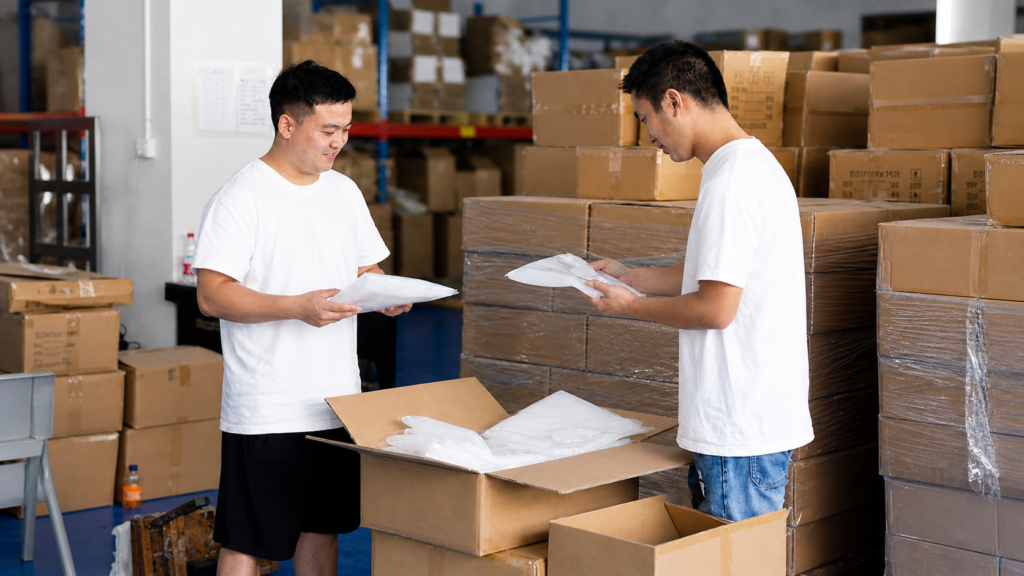
China fulfillment means using a China-based warehouse or 3PL to receive products from suppliers, inspect stock, store inventory, pick and pack orders and ship to customers, marketplaces or local warehouses. The seller can use China fulfillment for direct website orders, multi-country delivery, crowdfunding rewards, replacement parts, Amazon replenishment or low-volume SKU testing.
The two models solve different problems:
- Amazon FBA is strongest for Amazon marketplace demand.
- China fulfillment is strongest for supplier-side flexibility and direct ecommerce workflows.
- A hybrid model can use both for different products or channels.
When Amazon FBA Is Strong
Amazon FBA is powerful when the seller's main sales channel is Amazon and the product has predictable demand. It can reduce operational complexity because Amazon handles fulfillment after inventory is received.
Marketplace conversion
Amazon customers often expect fast delivery, reliable tracking and familiar customer service. FBA can support that marketplace expectation better than a seller shipping every Amazon order from China.
Operational simplicity
Once inventory is properly received, the seller does not need to pick, pack and ship each Amazon order manually. This can free time for product research, advertising, listing optimization and supplier management.
Customer service and returns
For FBA orders, Amazon handles many fulfillment-related customer service tasks. This can reduce workload for sellers who do not want to build a full support and returns operation at the early stage.
Domestic speed
Inventory stored near customers can usually ship faster than direct international fulfillment. This matters for competitive Amazon listings where delivery promise affects conversion.
Marketplace trust
Amazon customers may trust an FBA offer more than an unfamiliar merchant-fulfilled international shipment. For many categories, FBA is part of the conversion engine.
When Amazon FBA Is Weak
FBA is not automatically the best model for every SKU or channel. It creates inventory commitment, compliance demands and marketplace dependency.
Inventory must be sent before orders happen
FBA works best when demand is predictable. If the seller sends too much inventory, cash is tied up and storage costs can rise. If the seller sends the wrong SKU, the product may sit while the market moves on.
Prep mistakes can be expensive
Amazon has strict prep, labeling and shipment requirements. Incorrect labels, weak packaging, wrong box contents or non-compliant products can create delays, extra fees or stranded inventory. That is why sellers often need Amazon FBA prep service before inventory leaves China.
Branding control is limited
FBA is optimized for efficient marketplace fulfillment. Sellers have less control over unboxing, custom inserts, carrier experience and branded delivery compared with a dedicated fulfillment workflow.
Non-Amazon orders need another solution
If the brand also sells through Shopify, WooCommerce, wholesale, crowdfunding or other marketplaces, FBA may not be the ideal engine for every order. The seller may need a separate fulfillment workflow.
Long-tail SKUs may not justify FBA storage
Accessories, replacement parts and low-volume variants may not sell fast enough to justify FBA storage and replenishment planning.
When China Fulfillment Is Strong
China fulfillment works well when inventory starts in China and the seller needs flexibility before committing to local or marketplace storage.
Close to suppliers
If the product is manufactured in China, a China warehouse can receive stock quickly, inspect it, identify supplier issues and coordinate corrections before export.
Better for testing new SKUs
New products can be stored in China while demand is tested across ads, influencers, marketplaces and direct website channels. Sellers can avoid sending large quantities to Amazon or a local warehouse before sales data is proven.
Multi-country shipping
A China fulfillment center can ship to the United States, Canada, the United Kingdom, Australia, Europe and other markets from one origin. This is useful when a brand is testing multiple countries and does not yet know where demand will concentrate.
Branded packaging control
China fulfillment can support custom packaging, inserts, bundles, gift packaging, replacement parts and special packing rules. This matters for direct-to-consumer brands that want a more controlled customer experience.
Long-tail inventory
Slow-moving accessories and variant-heavy catalogs can remain in China while bestsellers move into Amazon FBA or local warehouses. This keeps catalog depth without spreading every SKU across many locations.
Supplier consolidation
If a seller buys from several Chinese suppliers, a China warehouse can consolidate products before shipping. This can reduce freight complexity and support multi-SKU kits.
When China Fulfillment Is Weak
China fulfillment also has tradeoffs. Sellers should be honest about them before building the model.
Delivery can be slower
Direct international parcel delivery is usually slower than domestic FBA delivery. Customers must see a realistic delivery window before checkout.
Customer service must be managed
The seller is responsible for communication, delivery exceptions, replacements and returns. A good fulfillment partner can support operations, but the brand still owns the customer promise.
Import and tax planning matters
Direct cross-border shipping can involve duties, taxes, customs data and route-specific limitations. Sellers must understand DDP, declared value, product restrictions and country rules before scaling.
Not ideal for urgent marketplace orders
If an Amazon listing competes on very fast delivery, direct China fulfillment may not match FBA performance. Marketplace demand often belongs in marketplace fulfillment once volume is proven.
Route quality varies by product
Small, lightweight products usually fit China fulfillment better than heavy, bulky or fragile products. The fulfillment model must match the SKU.
Cost Comparison
Cost is not just a pick and pack fee. Sellers need to compare total cost by channel, product and stage.
Amazon FBA cost factors
FBA costs may include:
- Freight to Amazon
- Prep and labeling
- FBA fulfillment fees
- Storage fees
- Aged inventory risk
- Removal or disposal fees
- Returns impact
- Marketplace referral fees
- Advertising cost
- Replenishment planning
FBA can be efficient for fast-moving Amazon SKUs, but it can become expensive for slow-moving products or inventory sent too early.
China fulfillment cost factors
China fulfillment costs may include:
- Supplier receiving
- Inspection
- Storage
- Pick and pack
- Packaging materials
- International parcel shipping
- DDP or import handling
- Replacement shipments
- Returns process
- Systems integration
- Customer support impact
China fulfillment can reduce early inventory commitment, but it may have higher per-order shipping cost than domestic fulfillment for mature bestsellers.
The real question
The real question is not which model is cheaper in general. The real question is which model protects margin and customer experience for this SKU, this country and this sales stage.
Speed and Delivery Promise
Amazon FBA usually wins on speed for Amazon marketplace orders where inventory is already in the destination country. That speed can improve conversion and customer trust.
China fulfillment can still work when:
- Customers accept the delivery window
- The product is unique or not easily found locally
- The storefront clearly explains shipping time
- The product is low-risk and compact
- Tracking is reliable
- The seller does not promise domestic delivery
The problem is not international shipping itself. The problem is mismatch. If a store promises fast local delivery while shipping from China, customers will feel misled. If the store clearly communicates realistic delivery, China fulfillment can be a useful model.
Inventory Risk
Inventory risk is where China fulfillment often beats FBA for new products.
With FBA, sellers usually need to move inventory before the market proves demand. If the product fails, stock may sit in Amazon storage. If the listing changes, labeling may need to be corrected. If demand spikes, replenishment lead time can create stockouts.
With China fulfillment, sellers can keep inventory close to suppliers and send orders, replacements or replenishment shipments as needed. They can test more SKUs with less local inventory commitment.
However, FBA becomes stronger when demand is proven. Once a SKU has consistent Amazon sales, domestic FBA stock can support faster delivery and better marketplace performance.
Branding and Customer Experience
Amazon FBA is designed around the Amazon customer experience. That can be excellent for Amazon shoppers, but it may not express the seller's brand deeply.
China fulfillment can support more custom brand touches:
- Branded boxes
- Custom mailers
- Inserts
- Bundle assembly
- Gift packaging
- Country-specific packing rules
- Replacement accessories
- Personalized packing slips where appropriate
For direct ecommerce brands, these details can matter. A Shopify customer who buys from a brand website may expect the package to feel like it came from the brand, not from a marketplace system.
Returns and Replacements
Returns are different in each model.
FBA can simplify Amazon returns because Amazon handles much of the process for FBA orders. This can reduce seller workload, but the seller must still monitor return reasons, product defects and account health.
China fulfillment requires a more intentional policy. Some returns may go to a local return address. Some low-value products may be refunded or replaced without return. Some defective products may need photos or videos before a replacement is sent.
Replacement shipments are often a good use case for China fulfillment. A small missing accessory, cable or spare part can be shipped from China without moving full local inventory.
Channel Strategy
The best fulfillment model depends on sales channel.
Amazon-only sellers
If nearly all sales happen on Amazon and demand is predictable, FBA may be the core model. China still matters for inspection, prep, consolidation and freight before products enter FBA.
Shopify and WooCommerce sellers
Direct website sellers often need more control over packaging, data, tracking and multi-country orders. China fulfillment can support Shopify fulfillment from China and WooCommerce fulfillment from China while products are still near suppliers.
Multi-channel sellers
Many brands use FBA for Amazon orders and China fulfillment for website orders, spare parts, international customers and new SKU testing.
Crowdfunding sellers
Crowdfunding campaigns may need inspection, kitting, batch dispatch and international shipping after production. China fulfillment can support crowdfunding fulfillment better than forcing all rewards into FBA.
Decision Framework
Use this decision framework before choosing Amazon FBA vs China Fulfillment.
Choose Amazon FBA when:
- Amazon is the main sales channel
- The SKU has proven demand
- Customers expect fast marketplace delivery
- The product is compliant and easy to prep
- Inventory turnover is healthy
- Branding needs are simple
- Returns should be handled through Amazon
- Local storage cost is justified
Choose China fulfillment when:
- Products are manufactured in China
- Demand is still being tested
- SKU count is high
- Products are compact and shippable
- The brand sells in multiple countries
- Custom packaging matters
- Supplier consolidation is needed
- Direct website orders need fulfillment
- Replacement parts need flexible dispatch
Use both when:
- Amazon bestsellers need FBA
- New SKUs need China testing
- Direct website orders need branded packing
- Low-volume accessories should stay in China
- Bulk replenishment should move only after demand is proven
- The brand sells across several markets
Example Hybrid Workflow
A seller launches a new home accessory sourced from two factories in China. Instead of sending all stock to Amazon immediately, the seller sends units to a China warehouse. The warehouse inspects stock, labels samples and prepares packaging.
The seller tests demand through Shopify ads, Amazon listings and influencer content. Early orders ship from China with realistic delivery windows. After 60 days, sales data shows that two colors sell well in the United States and Australia, while three colors sell slowly.
The seller moves the two winning colors to Amazon FBA and perhaps a local 3PL for faster delivery. The slower colors remain in China. Replacement parts and bundle components also stay in China. The seller uses China fulfillment for direct website orders outside the main markets.
This workflow reduces early inventory risk and still gives proven products the speed advantage of local or marketplace fulfillment.
How Fyllhub Supports Both Models
Fyllhub helps sellers use China as an operational base before products reach customers, marketplaces or local warehouses. That can include pure China fulfillment, Amazon FBA prep or a hybrid workflow.
Fyllhub can support:
- Supplier receiving in China
- Product inspection
- SKU storage
- Branded packaging
- Pick and pack fulfillment
- Direct international shipping
- DDP shipping options
- Amazon FBA prep
- FNSKU labeling
- FBA kitting
- Supplier consolidation
- Freight forwarding to Amazon or local warehouses
If you are deciding between Amazon FBA and China fulfillment, you can request a custom quote from Fyllhub. Share your product type, SKU count, monthly order volume, marketplace mix, countries served, current supplier locations and delivery expectations.
FAQ
What is the main difference between Amazon FBA and China fulfillment?
Amazon FBA stores and fulfills inventory through Amazon's fulfillment network, mainly for Amazon marketplace orders. China fulfillment uses a China-based warehouse to store, prepare and ship products to customers, marketplaces or warehouses.
Is Amazon FBA better than China fulfillment?
Amazon FBA is often better for proven Amazon marketplace demand and fast domestic delivery. China fulfillment is often better for new SKUs, supplier coordination, direct website orders, multi-country selling and flexible inventory testing.
Can I use both Amazon FBA and China fulfillment?
Yes. Many sellers use FBA for proven Amazon bestsellers and China fulfillment for new products, website orders, international customers, replacement parts and long-tail SKUs.
Which model has lower inventory risk?
China fulfillment usually has lower early inventory risk because products can stay near suppliers until demand is proven. FBA can be stronger after demand is predictable and fast marketplace delivery becomes important.
Which model is better for branded packaging?
China fulfillment usually gives sellers more control over branded packaging, inserts, kitting and special packing rules. FBA is optimized for efficient Amazon fulfillment.
Can Fyllhub help with Amazon FBA and China fulfillment?
Fyllhub can help with China fulfillment, FBA prep, inspection, labeling, kitting, supplier consolidation and freight coordination from China to Amazon or other destinations.
How should I decide where to store inventory?
Base the decision on channel, demand predictability, delivery promise, SKU size, margin, branding needs, return rate and inventory turnover. Many sellers keep new or slow-moving SKUs in China and move proven winners to FBA.
Final Thoughts
Amazon FBA vs China Fulfillment is really a question about stage and channel. FBA is powerful for proven Amazon demand. China fulfillment is powerful for flexibility, supplier proximity and direct ecommerce control. A hybrid model often gives sellers the best balance.
Do not choose one model because it sounds simpler. Choose the model that fits each SKU, country, channel and customer promise. Then update the model as sales data changes.
Fyllhub can help sellers design a China-based workflow that supports both Amazon and direct ecommerce growth. To compare options for your products, request a quote from Fyllhub.




 Chat on WhatsApp