
Australia Ecommerce Fulfillment from China: Delivery Options
China Fulfillment Australia is a practical logistics model for ecommerce brands that source products in China and sell to customers in Australia. Instead of moving every unit to an Australian warehouse before demand is proven, sellers can store inventory in China, prepare orders near suppliers and ship selected parcels, bulk transfers or replenishment stock to Australia when the business case is clear.
Australia is a valuable ecommerce market, but it is not a simple shipping destination. Sellers need to plan delivery timelines, GST treatment, DDP shipping options, customs value, carrier choice, tracking, returns and customer communication. Australian shoppers often accept international delivery when the product is unique or well priced, but they do not like vague shipping promises, surprise charges or weak tracking.
This guide explains how Australia ecommerce fulfillment from China works, when direct China shipping makes sense, when an Australian 3PL is better, how GST and import planning affect checkout experience and how Fyllhub can support China ecommerce fulfillment for brands selling into Australia.
What Is China Fulfillment Australia?
China Fulfillment Australia means using a China-based fulfillment workflow to receive, store, inspect, pack and ship products for Australian ecommerce orders. The products may be sent directly to Australian customers, consolidated into bulk shipments for an Australian warehouse, prepared for marketplace inventory or held in China until sales data proves which SKUs deserve local stock.
A typical workflow includes:
- Supplier receiving in China
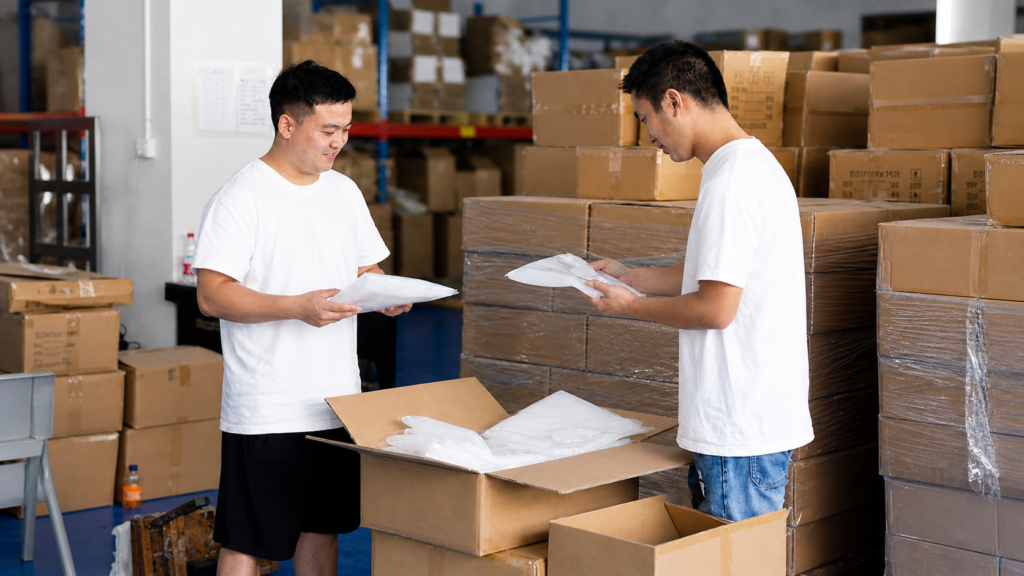
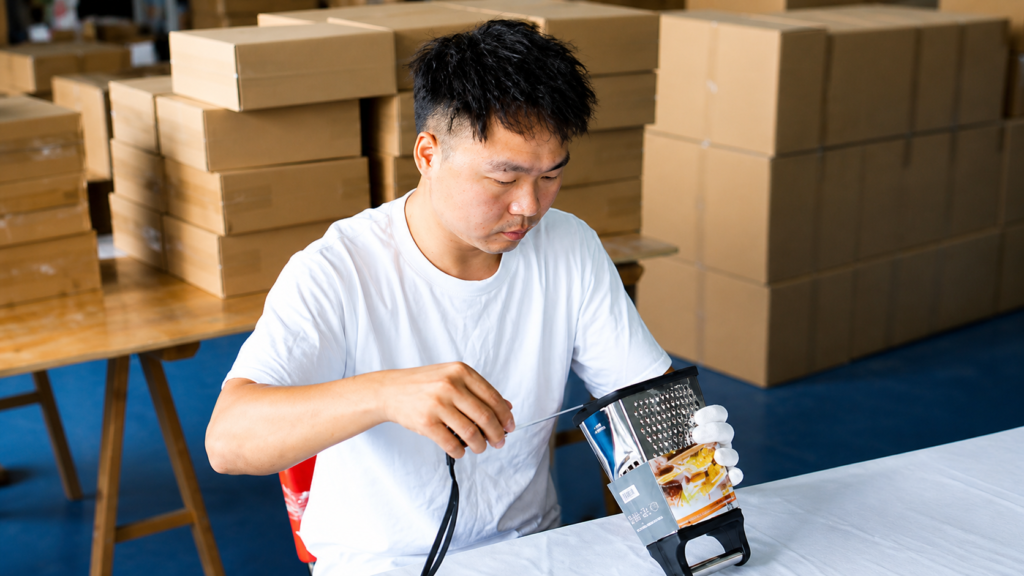
- Product inspection and carton checks
- SKU labeling and warehouse storage
- Branded packaging or inserts
- Pick and pack for Australian orders
- DDP shipping options where suitable
- Tracked parcel or express delivery
- Bulk replenishment to Australia
- Amazon FBA or marketplace prep
- Returns and replacement shipment support
The goal is not to keep every product in China forever. The goal is to choose the right inventory location for each product stage. New SKUs, long-tail variants and replacement parts may be better held in China. Proven bestsellers may deserve Australian storage. A strong logistics plan uses both options when volume supports it.
Why Sellers Use Fulfillment from China for Australia
Many ecommerce products sold to Australian customers start in Chinese factories. Moving products from the factory to a China warehouse before shipping can reduce unnecessary handling, give the seller better quality control and make international expansion easier.
Lower inventory risk
Shipping a large batch to Australia before demand is proven can tie up cash in the wrong SKUs. China fulfillment lets sellers test demand in smaller batches, learn which variants sell and avoid overstocking a local warehouse too early.
Better support for slow-moving SKUs
Accessories, replacement parts, color variants and niche products may sell too slowly to justify Australian storage. Keeping them in China can reduce storage waste while still giving customers a purchase option.
Faster supplier coordination
If suppliers are in Shenzhen, Guangzhou, Yiwu, Dongguan, Ningbo or nearby manufacturing regions, a China fulfillment center can receive products quickly and resolve packaging or quality issues before the goods travel overseas.
More control than supplier dropshipping
Supplier dropshipping can work for testing, but it often creates inconsistent packaging, uncertain inventory and limited inspection. A dedicated China fulfillment center gives the seller more control over stock, packaging, inserts, barcodes, photos and dispatch rules.
Flexible multi-country selling
Brands that sell to Australia often also sell to the United States, Canada, the United Kingdom, New Zealand, Europe and Southeast Asia. A China fulfillment workflow can serve multiple markets from one origin point while the seller decides which countries deserve local storage.
China Fulfillment vs Australia 3PL
An Australian 3PL can provide faster domestic delivery, easier local returns and a familiar delivery experience for high-volume products. It is often the right choice for proven winners, subscription products, fragile items, heavy products and campaigns where fast domestic delivery affects conversion.
China fulfillment is stronger when the seller needs flexibility, supplier proximity and lower inventory commitment. It can support product testing, international long-tail orders, replacement shipments and multi-country distribution without forcing the brand to split every SKU across multiple local warehouses.
Many sellers use a hybrid model:
- China fulfillment for new products and low-volume SKUs
- Australia warehouse storage for proven bestsellers
- Direct China shipping for international or long-tail orders
- Bulk freight to Australia when monthly demand becomes predictable
- Amazon FBA or marketplace fulfillment for marketplace volume
- China-based replacement shipments for damaged or missing accessories
This hybrid model is often healthier than choosing one warehouse location for everything. It lets sellers move inventory based on data instead of assumptions.
GST and Import Planning for Australia
Australia has specific rules for imported goods, and sellers should confirm current requirements with official guidance, a customs broker or a tax professional before launching at scale. This article is a logistics planning guide, not tax advice.
For official reference, sellers can review the Australian Border Force guide to buying online, ABF information on GST on low value goods when importing, and the Australian Taxation Office page on GST on low value imported goods.
For ecommerce logistics, the practical issue is customer experience. Sellers should decide how GST and import-related charges are handled before advertising delivery times or pricing. If customers are surprised by extra charges or unclear carrier messages, the brand may pay for it through refunds, support tickets and lower repeat purchase rates.
Important planning questions include:
- Is the product treated as a low value imported good?
- Is the seller, marketplace or platform responsible for GST collection?
- Does the order value or consignment value change import handling?
- Are there product-specific restrictions, declarations or duties?
- Will the route support DDP shipping or other prepaid options?
- What customs value and product description must be provided?
- How will the checkout explain taxes, duties and delivery expectations?
Australia's GST rules can affect online sellers even when the seller does not have a local office. That is why GST should be part of fulfillment planning, not a last-minute finance task.
DDP Shipping to Australia
DDP shipping from China to Australia can be useful when sellers want a cleaner delivery experience. DDP means delivered duty paid. In ecommerce terms, it usually means that duties, taxes or import-related charges are handled before final delivery when the route and product support that model.
DDP can be attractive because Australian customers usually prefer a clear total price at checkout. A customer who pays once and receives the package without a confusing carrier bill is more likely to trust the brand.
However, DDP is not always the best option. Product category, declared value, route availability, customs treatment, carrier process and margin all matter. Some products may move better through standard tracked parcel, express courier, air freight, sea freight or bulk replenishment to a local warehouse.
Sellers should compare DDP shipping from China with other shipping models before promising a delivery method on the storefront. A good fulfillment partner can help compare landed cost, delivery speed, tracking quality and risk.
Delivery Options from China to Australia
The best delivery option depends on product size, order value, customer promise and volume. There is no universal route that fits every SKU.
Tracked parcel
Tracked parcel routes can work for small, lightweight ecommerce orders. They are often suitable for accessories, beauty tools, small electronics accessories, apparel, craft products, home goods and replacement parts. The seller should check tracking visibility, expected delivery window, remote area coverage and failed delivery handling.
Express courier
Express courier can support urgent orders, high-value products, samples and business customers. It usually costs more than economy parcel, but it may reduce support pressure when customers need faster delivery or tighter tracking.
DDP ecommerce line
A DDP ecommerce line may be useful for brands that want import handling built into the delivery model. The seller should confirm product eligibility, maximum value, weight limits, address coverage, invoice rules and whether the customer will face any additional charges.
Air freight to Australia warehouse
Air freight is useful when inventory needs to move faster than sea freight but the seller wants to replenish an Australian warehouse in bulk. It can work for launches, fast-moving SKUs or seasonal campaigns where stockouts are costly.
Sea freight to Australia warehouse
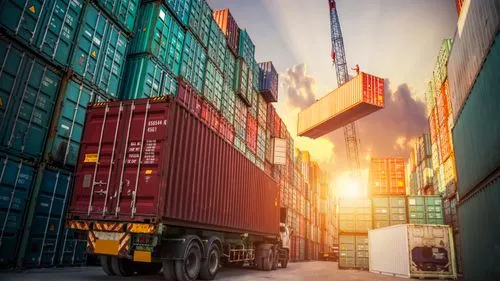
Sea freight is usually slower but can reduce unit cost for heavier or higher-volume inventory. It is better for predictable replenishment than urgent orders. Sellers should plan production, inspection, pickup, export, ocean transit, customs, local delivery and receiving time together.
Hybrid shipping
Many brands use more than one route. They may ship bestsellers by sea to an Australian 3PL, use direct China parcel for low-volume SKUs and keep express courier available for replacements or VIP orders.
When Direct China Shipping Works Best
Direct fulfillment from China to Australian customers works best when the product and customer promise fit the route.
The product is small and lightweight
Small products are usually better candidates because parcel cost is easier to control. Bulky or heavy products may become expensive when shipped one by one.
Delivery expectations are clear
If the store clearly states that delivery is international and gives a realistic delivery window, customers can make an informed purchase decision. Problems arise when sellers promise domestic-style delivery while shipping internationally.
The product is unique or hard to find locally
Customers may accept a longer delivery window when the product is specialized, personalized, customized or difficult to buy in Australia.
Demand is still uncertain
New products can remain in China while the seller tests ads, conversion rate, return rate and repeat purchase behavior. Once volume is steady, the seller can move winners to Australia.
SKU count is high
If a seller has many variants, it may be expensive to stock every option in Australia. China fulfillment can support long-tail inventory while local storage focuses on the top performers.
The seller sells to multiple countries
If Australia is one of several target markets, one China warehouse can serve global demand until country-level volume supports local stock.
When an Australia Warehouse Is Better
Direct China fulfillment is not the right fit for every product. Sellers should consider Australian storage when:
- Customers expect fast domestic delivery
- Products are heavy, bulky or fragile
- Return rates are high
- The SKU is a proven bestseller
- The brand sells subscriptions or replenishment products
- Local marketplaces reward faster delivery promises
- Seasonal campaigns require inventory already in Australia
- Support costs rise because delivery takes too long
The decision should be based on contribution margin, conversion rate, delivery promise and order volume. A product does not need to stay in China just because it is made in China. The right fulfillment strategy changes as demand matures.
How to Build an Australia Fulfillment Workflow
A reliable workflow starts before the first parcel leaves China. Sellers should define the operating rules clearly so the fulfillment team can repeat them without guesswork.
Step 1: Map products and SKU behavior
List every SKU, variant, bundle and replacement part. Note unit size, weight, value, packaging type, fragility, battery status, customs description, monthly order volume and target gross margin. This shows which products are good candidates for direct shipping and which may need local storage.
Step 2: Set the customer promise
Choose a delivery window that matches the route. Do not use vague copy like "fast shipping" if the route is international and variable. Clear delivery language can reduce chargebacks and support tickets.
Step 3: Confirm GST and import handling
Before selling at scale, confirm who is responsible for GST collection, what documentation is needed and whether DDP or other prepaid models are available. Marketplaces, direct websites and B2B orders may have different practical handling.
Step 4: Prepare product data
Fulfillment depends on clean data. Each SKU should have a clear name, barcode, image, package dimensions, weight, HS code if available, customs description, declared value guidance and packing rule.
Step 5: Receive and inspect stock in China
The warehouse should check cartons, quantities, visible damage, labeling and packaging. For higher-risk products, sellers may also request product inspection before goods are accepted into storage.
Step 6: Define packing standards
Packing standards should cover outer packaging, inserts, barcode placement, fragile protection, battery warnings, bundle assembly and branded materials. Sellers that care about repeat purchases should avoid generic supplier packaging where possible.
Step 7: Choose routes by SKU
Do not force every product into one shipping route. A compact accessory may work through tracked parcel. A high-value item may need express courier. A bestseller may need bulk replenishment to Australia.
Step 8: Connect order systems
Shopify, WooCommerce and marketplace orders should flow into the fulfillment workflow with accurate shipping address, SKU, quantity, customer email and delivery method. Manual spreadsheets can work temporarily, but they become risky as order volume grows.
Step 9: Monitor delivery and support data
Track delivery time, failed delivery rate, return reasons, customer complaints, replacement shipments and actual landed cost. This data tells sellers when to adjust routes or move stock locally.
Australia Fulfillment Cost Factors
Sellers should compare total landed cost instead of only looking at the cheapest parcel rate. A cheaper route can become expensive if it creates delays, refunds or failed deliveries.
Key cost factors include:
- Product weight and dimensions
- Packaging weight
- Customs value and product category
- Delivery speed requirement
- Remote area coverage
- Tracking quality
- DDP or tax handling
- Pick and pack fees
- Storage fees
- Carton receiving fees
- Returns and replacement cost
- Customer support cost
- Bulk replenishment cost
For a broader cost framework, sellers can review Fyllhub's guide on how to reduce ecommerce shipping costs from China. The cheapest route is only valuable when it still protects customer experience and margin.
Inventory Strategy for Australian Sellers
Inventory planning is the difference between a flexible fulfillment model and a chaotic one. Sellers should separate SKUs into groups.
Test SKUs
These products are being validated through ads, influencer campaigns or marketplace listings. Keep stock lean and avoid large local commitments until sales data is reliable.
Long-tail SKUs
These products sell occasionally but are important to catalog completeness. China storage can keep them available without filling an Australian warehouse with slow-moving stock.
Proven bestsellers
These products may deserve Australian storage once volume, margin and customer expectations justify it. The seller can use China fulfillment for overflow, international orders or backup inventory.
Replacement parts
Small spare parts can often stay in China and ship when needed. This reduces the need to hold low-value support inventory in multiple local warehouses.
Seasonal products
Seasonal items need earlier planning. If an Australian campaign depends on Christmas, summer, back-to-school or event timing, bulk stock may need to move before the peak.
Shopify and WooCommerce Fulfillment to Australia
Direct-to-consumer sellers usually need a workflow that connects storefront orders to fulfillment operations. A China warehouse should be able to receive order data, pick items accurately and return tracking details.
For Shopify stores, sellers should map SKU codes carefully and avoid using product names as fulfillment identifiers. For WooCommerce stores, sellers should make sure each variation has a unique SKU and that orders include complete customer address fields.
Fyllhub can support Shopify fulfillment from China and WooCommerce fulfillment from China as part of a broader Australia delivery model. The important point is that order data must be clean before scale. Bad SKU mapping creates wrong shipments no matter how good the warehouse is.
Amazon, Marketplaces and Australia Replenishment
Some sellers use China fulfillment for their direct website and Amazon or marketplace fulfillment for marketplace orders. Others use China as a prep and replenishment point before sending stock to a marketplace warehouse.
If selling through Amazon Australia or another marketplace, sellers should check marketplace-specific rules for labeling, carton limits, appointment booking, packaging, prohibited products and tax treatment. Fyllhub can also support related workflows such as Amazon FBA shipping from China when marketplace inventory needs to move from suppliers to fulfillment centers.
The best structure may combine:
- China supplier receiving
- Quality control before export
- FBA prep or marketplace labeling
- Bulk freight to Australia
- Direct website fulfillment from China
- Local replenishment for high-volume SKUs
This lets sellers avoid treating Australia as a single-channel market.
Returns and Customer Experience
Returns are harder when inventory ships internationally, so sellers should design the policy carefully. Not every return needs to travel back to China. For low-value products, replacement, partial refund or local disposal may be more practical. For higher-value products, an Australian return address or inspection partner may be useful.
The return strategy should answer:
- Which products are eligible for return?
- Who pays return shipping?
- Can damaged items be replaced from China?
- Should returns go to Australia or China?
- How will photos or videos be used for claim review?
- What is the refund timeline?
- What replacement route should be used?
A clear return workflow protects both the customer and the seller's margin.
Common Mistakes to Avoid
Promising unrealistic delivery times
If the route usually takes more than a week, the website should not suggest near-domestic delivery. Honest delivery copy helps attract customers who accept the timeline.
Ignoring GST until orders scale
GST and import planning should be reviewed before launch. Waiting until Australian sales grow can create pricing, reporting and customer service problems.
Using supplier packaging without checks
Supplier packaging may not match brand standards or international shipping needs. A China fulfillment center can repack, protect and standardize orders.
Treating all SKUs the same
Different products need different shipping routes. Route decisions should be based on size, weight, value, demand and customer promise.
Forgetting remote area delivery
Australia has large geography and remote delivery considerations. Sellers should understand coverage, surcharges and delivery time variation before setting a national promise.
Not tracking actual margin
Shipping, packaging, GST handling, support time, refunds and replacements all affect margin. Sellers should calculate landed cost by SKU, not just average order cost.
How Fyllhub Helps with Australia Ecommerce Fulfillment
Fyllhub helps ecommerce sellers build a China-to-Australia fulfillment workflow that fits product stage, SKU behavior and customer expectations. Instead of relying on a supplier to ship orders one by one, sellers can use a structured China warehouse workflow with receiving, inspection, storage, packing and shipping support.
Fyllhub can help with:
- Supplier receiving in China
- Product and packaging checks
- China warehouse storage
- SKU organization
- Branded packaging and inserts
- Pick and pack fulfillment
- Australia order shipping
- DDP shipping options where available
- Bulk replenishment to Australia
- Amazon FBA and marketplace prep
- Replacement and spare part shipping
- Freight coordination through China freight forwarding
This gives Australian ecommerce sellers a flexible path from sourcing to delivery. New products can remain in China while the seller tests demand. Proven winners can move to Australian storage when the numbers support it.
If you sell to Australian customers and source products from China, you can request a custom quote from Fyllhub. Share your product type, SKU count, monthly Australia order volume, packaging needs, delivery expectations, supplier locations and any GST or DDP requirements you already know.
FAQ
What is China Fulfillment Australia?
China Fulfillment Australia means storing, preparing or shipping products from China for Australian ecommerce customers, warehouses, marketplaces or replenishment workflows.
Is fulfillment from China good for Australian ecommerce sellers?
It can be useful for new products, long-tail SKUs, accessories, replacement parts and multi-country selling. Proven bestsellers may still need Australian warehouse storage for faster delivery.
Can China fulfillment include DDP shipping to Australia?
Yes, some routes may support DDP shipping to Australia where import-related charges are handled before delivery. Sellers should confirm product eligibility, route rules and current tax handling before promising DDP.
What should sellers know about Australian GST?
Australian GST rules may apply to low value imported goods and non-resident sellers. Sellers should review current ATO and ABF guidance or consult a tax professional before selling at scale.
Should I use China fulfillment or an Australian 3PL?
Many brands use both. China fulfillment can support testing, supplier coordination and international long-tail orders, while an Australian 3PL can support faster domestic delivery for proven products.
Can Fyllhub fulfill Shopify and WooCommerce orders to Australia?
Fyllhub can help fulfill Shopify and WooCommerce orders from China to Australian customers when sellers provide accurate SKU data, packaging rules, order details and delivery expectations.
How do I start Australia ecommerce fulfillment from China?
Prepare SKU details, product dimensions, supplier locations, order volume, target delivery window, packaging rules, GST planning notes and route preferences. Then request a fulfillment quote from a China fulfillment partner.
Final Thoughts
Australia Ecommerce Fulfillment from China can help sellers test demand, control inventory risk and serve Australian customers without moving every SKU into local storage too early. It works best when the seller plans GST, DDP options, delivery routes, packaging, tracking and returns before orders scale.
The strongest strategy is usually hybrid. Use China fulfillment for new SKUs, long-tail products, supplier coordination and flexible international delivery. Use Australian storage for proven products when faster domestic delivery improves conversion and margin.
Fyllhub can help sellers design that workflow from China suppliers to Australian customers. To compare fulfillment options for your products, request a quote from Fyllhub.





 Chat on WhatsApp