
Private Label Dropshipping from China: Fulfillment Guide
Private Label Dropshipping from China helps ecommerce brands sell products under their own brand while using China-based sourcing, packaging, inspection, warehousing and fulfillment support. It is different from basic dropshipping because the seller is not simply reselling a generic supplier product. The goal is to create a branded product experience with better control over product quality, packaging, inserts, shipping and customer expectations.
For many ecommerce sellers, private label dropshipping is a bridge between simple supplier shipping and full inventory ownership in a domestic warehouse. A brand can source products in China, add custom packaging, inspect goods, store inventory in a China fulfillment center and ship orders to global customers. This creates more control than traditional dropshipping while avoiding the complexity of building a warehouse operation from scratch.
This guide explains how private label dropshipping from China works, how it differs from generic dropshipping, what sellers should prepare before launching, how fulfillment and quality control fit into the workflow and how Fyllhub can support private label dropshipping for ecommerce brands.
What Is Private Label Dropshipping?
Private label dropshipping is a fulfillment model where a seller markets products under its own brand while a third-party partner helps source, store, pack and ship orders. The products may be manufactured by a supplier, customized with the seller's logo or packaging and fulfilled from a warehouse or fulfillment center.
The model can include:
- Product sourcing
- Supplier vetting
- Sample coordination
- Logo or packaging customization
- Product inspection
- Inventory storage
- Pick and pack fulfillment
- Branded inserts
- Order shipping
- Tracking updates
- DDP shipping where suitable
- Returns or replacement support
The seller controls the brand, storefront, customer promise and marketing. The fulfillment partner supports the physical movement of products from supplier to customer.
Private Label Dropshipping vs Generic Dropshipping
Generic dropshipping usually means selling a supplier's existing product and asking the supplier to ship orders directly to customers. It can be quick to start, but it often gives the seller limited control over quality, packaging, shipping speed and customer experience.
Private label dropshipping is more brand-focused. The seller may use custom packaging, product inserts, logo placement, quality checks and specific shipping rules. The product may still be fulfilled by a partner, but the experience should feel like it comes from the seller's brand.
The differences matter:
- Generic dropshipping focuses on speed to launch.
- Private label dropshipping focuses on brand control.
- Generic dropshipping may use supplier packaging.
- Private label dropshipping can use branded packaging.
- Generic dropshipping may have weak inspection.
- Private label dropshipping should include quality control.
- Generic dropshipping may have inconsistent tracking.
- Private label dropshipping should define shipping methods and customer expectations.
For sellers who want repeat buyers, brand trust and long-term value, private label usually offers a stronger foundation.
Why Sellers Use China for Private Label Dropshipping
China is a major sourcing and manufacturing base for ecommerce products. Many brands already use Chinese suppliers for product development, packaging and production. Using China for private label dropshipping can make sense because the product, packaging and fulfillment steps can be coordinated near the source.
Supplier options are broad
Sellers can find manufacturers, packaging vendors and component suppliers across many categories. This can support product customization, accessory bundles and branded packaging.
Packaging can be customized near production
Custom boxes, inserts, stickers, sleeves, manuals and branded bags can often be produced in China and stored with the fulfillment partner. This creates a more professional customer experience than plain supplier packaging.
Inspection can happen before orders ship
A China-side workflow allows sellers to inspect products before they enter fulfillment. This reduces the risk of sending defective products to customers.
Global fulfillment can be flexible
Products stored in China can be shipped to customers in several countries, sent to Amazon FBA, moved to a regional warehouse or used for samples and influencer kits.
Inventory testing is easier
Sellers can start with smaller batches, test demand and scale inventory gradually. This is useful for new brands and new products.
When Private Label Dropshipping Makes Sense
Private label dropshipping from China is useful when the seller wants more control than basic dropshipping but is not ready to build a full warehouse operation.
It can make sense when:
- Products are sourced or manufactured in China.
- The seller wants branded packaging.
- Order volume is still growing.
- Customers are in multiple countries.
- The product is lightweight or compact.
- The seller wants to test a new SKU.
- A local warehouse is too expensive for early-stage inventory.
- The brand needs quality checks before fulfillment.
- The seller wants to combine sourcing and fulfillment support.
This model works best when the product has enough margin to support branding, inspection, fulfillment and shipping. If a product has very low value or fragile margins, private label dropshipping may be difficult.
When It May Not Be the Right Model
Private label dropshipping is not the best answer for every business.
It may not be ideal when:
- The product is bulky or heavy.
- Customers expect very fast domestic delivery.
- The product has strict compliance requirements.
- Return rates are high.
- The product margin is too low.
- Custom packaging is not important.
- The seller wants zero inventory commitment.
- The product needs complex after-sales service.
In these cases, a local 3PL, Amazon FBA, wholesale distribution or another fulfillment model may work better. Many brands eventually use a hybrid model with some products fulfilled from China and bestsellers stored locally.
The Private Label Dropshipping Workflow from China
A strong workflow should connect sourcing, inspection, packaging and fulfillment. Treating these steps separately can create mistakes.
Step 1: Product and supplier selection
The seller chooses a product and identifies suppliers. This may involve Alibaba research, factory outreach, sample requests or help from a China sourcing agent. The goal is to find a supplier that can produce consistent products, communicate clearly and support customization.
Step 2: Sample review
Samples should be checked for quality, material, size, color, function, packaging and customer experience. Sellers should not rely only on supplier photos.
Step 3: Brand and packaging setup
Private label success depends on presentation. Sellers may create logo labels, custom packaging, inserts, manuals, thank-you cards, stickers or branded mailers. Packaging should be attractive but also practical for shipping.
Step 4: Production or batch purchase
The seller places an order with the supplier. Instead of buying unlimited inventory, many sellers start with a controlled batch to test demand and fulfillment performance.
Step 5: China inspection
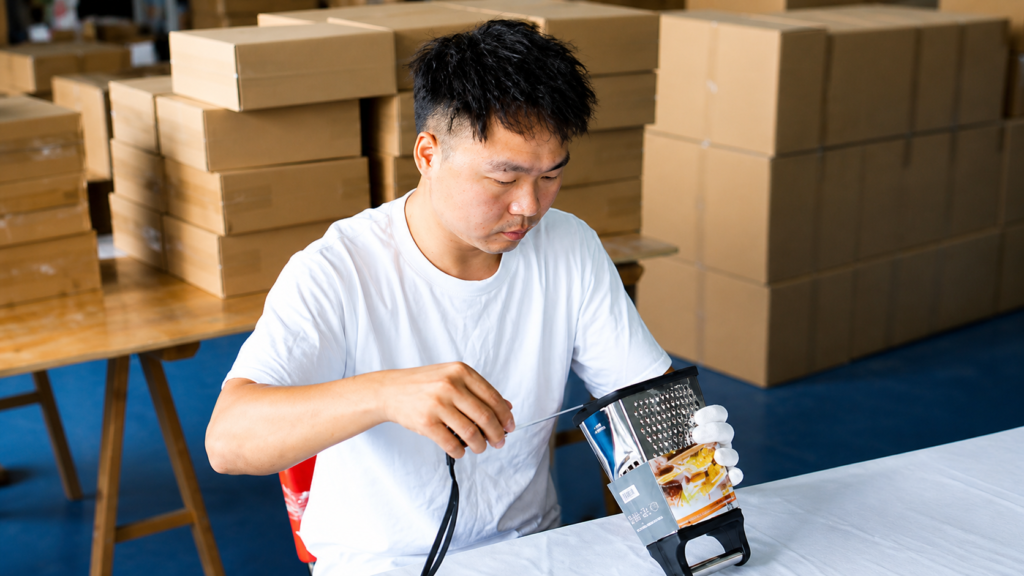
Before products enter fulfillment, sellers should inspect quality, packaging, labels and quantities. Fyllhub's China inspection workflow can help catch problems before customer orders are shipped.
Step 6: Warehouse storage
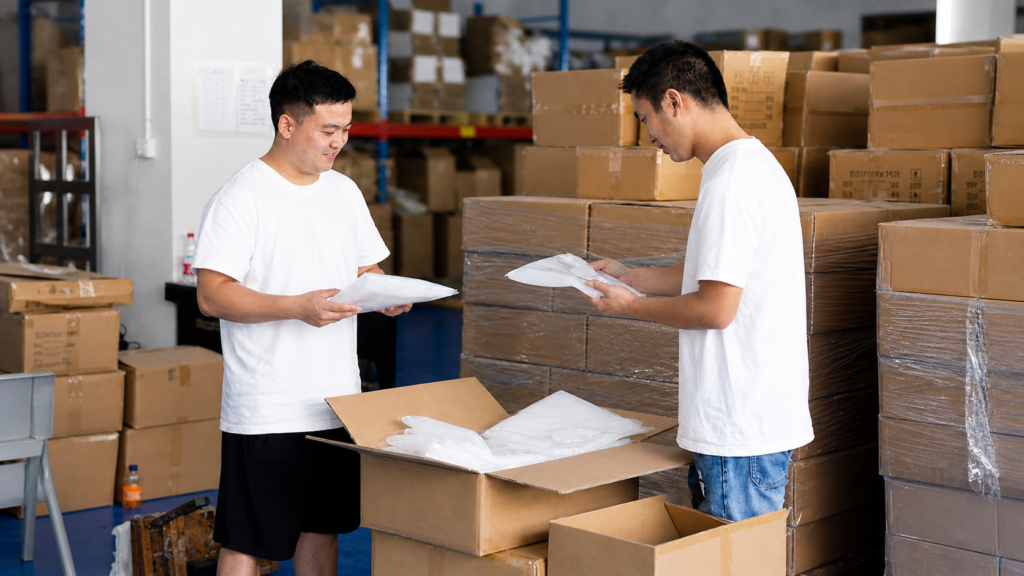
Products are moved to a China fulfillment center or warehouse. Inventory is organized by SKU, variant, batch or channel. Packaging materials should also be tracked as inventory.
Step 7: Order fulfillment
When orders arrive, the warehouse picks the correct product, applies the agreed packaging rules, ships the order and provides tracking. This can support Shopify, WooCommerce, marketplace or custom ecommerce orders.
Step 8: Shipping and delivery
Shipping method depends on destination, product weight, value, delivery promise and whether DDP shipping is needed. The seller should test shipping routes before promising delivery times on the storefront.
Product Sourcing for Private Label Dropshipping
Sourcing is the foundation of the model. Sellers should choose suppliers based on product fit, consistency and willingness to support brand requirements.
Important supplier questions include:
- Can the supplier provide samples?
- Can it customize packaging or logo placement?
- What is the MOQ?
- What materials are used?
- What quality control process exists?
- How long is production?
- Can the supplier provide carton dimensions and weights?
- Can it deliver to a China warehouse?
- Has it worked with ecommerce brands before?
A cheap product is not useful if customers complain after delivery. Sellers should compare total product quality, not only unit price.
Packaging and Brand Experience
Private label dropshipping depends heavily on packaging. Customers should feel they ordered from a real brand, not a random supplier.
Packaging options may include:
- Logo stickers
- Branded boxes
- Product sleeves
- Inserts
- Manuals
- Thank-you cards
- QR cards
- Branded mailers
- Protective material
- Bundle packaging
Packaging should be tested before scaling. It needs to protect the product, fit the shipping method and support the brand image. Oversized packaging may increase shipping cost. Weak packaging may cause damage. Too many inserts may slow packing.
Quality Control Before Fulfillment
Quality control is what separates private label dropshipping from low-control supplier shipping. If products are stored and fulfilled without checks, the seller may ship defects directly to customers.
Quality control can include:
- Product appearance checks
- Function checks
- Quantity checks
- Packaging checks
- Label checks
- Accessory checks
- Variant confirmation
- Carton checks
- Photo reporting
Inspection is especially important for first orders, new suppliers, custom packaging, electronics, beauty products, bundles and products with moving parts. If defects are found, sellers can request repair, replacement, sorting or repacking before fulfillment begins.
Fulfillment for Shopify and WooCommerce Stores
Private label dropshipping from China is often used by Shopify and WooCommerce brands. The store owns the customer relationship, while the fulfillment partner handles inventory and shipping.
For Shopify fulfillment from China or WooCommerce fulfillment from China, sellers should prepare clean order data, SKU names, variant details, packaging rules and shipping methods.
The fulfillment partner needs:
- Customer name
- Full address
- Phone number when required
- SKU and variant
- Quantity
- Shipping method
- Packing instructions
- Gift note or insert rules if needed
Good order data reduces fulfillment errors and customer support problems.
Shipping and DDP Options
Shipping can make or break the customer experience. Sellers should choose shipping methods based on destination, delivery promise, product value and cost.
DDP shipping may be useful for some private label orders because it can reduce surprise customs fees for customers. DDP means duties and import-related charges are handled before delivery. Availability depends on product type, destination, declared value and route.
For global ecommerce, sellers may use:
- Economy parcel
- Tracked parcel
- Express courier
- DDP shipping
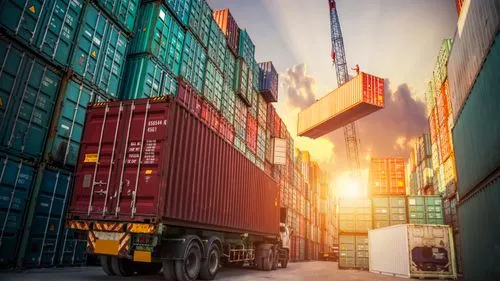
- Bulk freight to a local warehouse
- Amazon FBA replenishment
A China freight forwarder or fulfillment partner can help compare routes. Sellers should test key markets before advertising delivery timelines.
Inventory Planning
Private label dropshipping usually still requires some inventory control. The seller may not operate the warehouse, but products and packaging materials need to be available before orders can be fulfilled.
Track:
- Units available
- Units reserved
- Units damaged
- Packaging material stock
- Average daily sales
- Reorder lead time
- Production time
- Shipping time
- Stockout risk
New sellers can start with smaller batches. As sales data improves, they can decide which SKUs deserve deeper stock or regional warehouse placement.
Returns and Customer Support
Private label brands should plan returns and replacements before orders scale. Some products can use a local return address, while lower-value products may be handled through photo review, replacement shipments or refund rules. The right policy depends on product value, defect rate, destination and shipping cost.
Customer support also needs clear answers about delivery timelines, tracking updates, damage claims, missing items and replacement steps. A fulfillment workflow is stronger when the seller, warehouse and support team all follow the same rules.
Common Private Label Dropshipping Mistakes
Treating private label like generic dropshipping
Private label needs more control over quality, packaging and fulfillment. If the seller does not add brand value, the model becomes ordinary dropshipping.
Skipping samples
Samples help sellers evaluate the product before ordering inventory. Skipping samples increases risk.
Using weak packaging
Packaging affects customer trust and damage rate. Test packaging before scaling.
No inspection before fulfillment
If defects enter storage, the warehouse may ship bad units to customers before anyone notices.
Promising unrealistic delivery times
Shipping timelines should be based on tested routes. Overpromising delivery creates support tickets and refund requests.
Ignoring returns and replacements
Private label brands need a clear policy for damaged products, wrong orders and replacements.
How to Choose a Private Label Dropshipping Partner in China
The right partner should understand sourcing, packaging, quality control, warehousing and ecommerce fulfillment. A supplier alone may not provide enough operational support.
Ask these questions:
- Can you help source or receive products from suppliers?
- Can you store branded packaging materials?
- Can you inspect products before fulfillment?
- Can you manage SKU variants?
- Can you pack orders with brand rules?
- Can you support Shopify or WooCommerce workflows?
- Can you ship to our main customer countries?
- Can you offer DDP shipping where suitable?
- Can you provide inventory updates?
- Can you support replacements or special projects?
A strong partner should help the seller create a repeatable branded workflow, not only ship random orders.
How Fyllhub Helps With Private Label Dropshipping
Fyllhub helps ecommerce sellers build private label dropshipping workflows from China. This can include sourcing support, supplier receiving, inspection, warehouse storage, branded packing and global order fulfillment.
Fyllhub can help with:
- Product sourcing support
- Supplier communication
- Sample coordination
- China inspection
- Private label packaging support
- Branded inserts and labels
- China warehouse storage
- SKU organization
- Pick and pack fulfillment
- Shopify and WooCommerce order workflows
- DDP shipping coordination
- Freight forwarding and regional warehouse replenishment
This gives sellers a more controlled alternative to generic dropshipping. Instead of relying on suppliers to handle everything, sellers can create a China-side workflow designed around the brand.
If you need private label dropshipping from China, you can request a custom quote from Fyllhub. Share your product type, supplier status, packaging requirements, monthly order volume, target countries and shipping expectations.
FAQ
What is private label dropshipping from China?
Private label dropshipping from China is a fulfillment model where sellers source or customize products in China, sell them under their own brand and use a China partner to store, pack and ship orders.
Is private label dropshipping better than generic dropshipping?
It can be better for brands that want more control over packaging, quality and customer experience. Generic dropshipping may be faster to start, but private label offers stronger brand control.
Do I need inventory for private label dropshipping?
Usually yes. Private label dropshipping often involves holding branded inventory or packaging materials with a fulfillment partner so orders can be packed and shipped consistently.
Can Fyllhub help with private label packaging?
Fyllhub can help coordinate branded packaging, inserts, labels and packing rules when materials are prepared and stored with the fulfillment workflow.
Should private label products be inspected?
Yes. Inspection helps catch defects, packaging problems, wrong labels and missing accessories before products are shipped to customers.
Can private label dropshipping use DDP shipping?
Some routes can use DDP shipping, where duties and import-related charges are handled before delivery. Availability depends on product type, destination and route.
How do I start private label dropshipping from China?
Prepare your product idea, supplier details, packaging requirements, target countries, monthly order estimate and quality standards. Then request a quote from a China fulfillment partner.
Final Thoughts
Private Label Dropshipping from China can help ecommerce brands move beyond generic supplier shipping and build a more controlled customer experience. The model works best when sourcing, packaging, inspection, storage and fulfillment are connected.
The key is to treat private label as a brand workflow, not only a shipping shortcut. Product quality, packaging, delivery promises and customer support all need clear standards.
Fyllhub can help sellers create that workflow from China. To plan private label sourcing, packaging and fulfillment, request a quote from Fyllhub.



 Chat on WhatsApp