
Product Quality Control in China for Amazon Sellers
China Inspection is one of the most important risk-control steps for Amazon sellers who source products from Chinese suppliers. Before inventory is shipped to Amazon FBA, sellers need to know whether products match specifications, packaging is correct, labels are accurate, quantities are complete and defects are within an acceptable limit. Once defective goods reach Amazon, fixing the problem becomes slower, more expensive and more damaging to customer trust.
Many Amazon sellers focus heavily on product research, supplier negotiation and shipping cost, then treat inspection as optional. That is risky. A product can look fine in supplier photos but still have wrong materials, weak packaging, missing accessories, incorrect barcodes or inconsistent workmanship. If those problems reach customers, sellers may face refunds, negative reviews, listing suppression, removal orders and inventory write-offs.
This guide explains how product quality control in China works for Amazon sellers, which inspection stages matter, what to include in an inspection checklist, how inspection connects with FBA prep and shipping, and how Fyllhub can support China inspection before inventory leaves China.
What Is China Inspection?
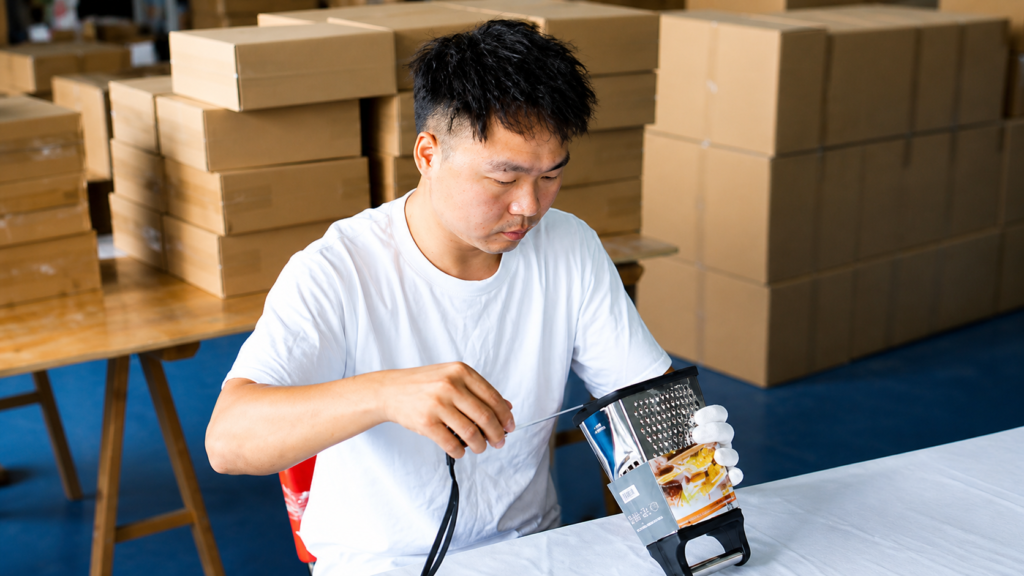
China Inspection is the process of checking products, packaging, labels, cartons and shipment details before goods move to Amazon, customers or another warehouse. It is usually performed at the factory, supplier warehouse or a third-party warehouse in China.
For Amazon sellers, inspection may include:
- Product appearance checks
- Quantity checks
- Packaging checks
- Barcode and FNSKU checks
- Accessory checks
- Color, size and variant confirmation
- Basic function testing
- Carton condition checks
- Carton count verification
- Bundle or kit completeness checks
- Photo reporting
- Defect classification
- Shipment readiness review
The goal is not to make production perfect. The goal is to find serious problems early enough that the seller can fix, reject, sort, repack or renegotiate before inventory is shipped internationally.
Why Amazon Sellers Need Product Quality Control
Amazon customers judge the seller by what arrives at their door. If the product is defective, incomplete or poorly packaged, the buyer does not care which supplier made the mistake. The Amazon brand owner receives the review, refund request and account risk.
Defects hurt reviews
Negative reviews can reduce conversion and ranking. A small defect rate can become a serious business problem if many defective units reach customers.
Amazon receiving problems are expensive
Wrong labels, damaged cartons or inaccurate shipment information can delay receiving. Inventory that is not available for sale can create stockouts and lost revenue.
Removal orders cost time and money
If inventory reaches Amazon with quality problems, sellers may need removal orders, disposal, relabeling or returns. These options are slower and more expensive than catching problems in China.
Suppliers may not check the same things sellers care about
Factories often check production from their own perspective. Amazon sellers need checks based on customer expectations, listing promises, FBA requirements and brand standards.
Inspection supports better supplier accountability
When sellers use clear inspection reports, defect photos and written standards, supplier conversations become more concrete. It is easier to ask for correction when the issue is documented.
When to Inspect Products in China
Inspection can happen at several stages. The best timing depends on order size, supplier history and product risk.
Pre-production review
Before production begins, sellers can review samples, materials, packaging artwork, labels and specifications. This step helps prevent misunderstandings.
During production inspection
During production inspection checks goods while production is still in progress. It is useful for larger orders or new suppliers because problems can be caught before the entire batch is finished.
Pre-shipment inspection
Pre-shipment inspection happens after production is complete but before goods leave the supplier. This is the most common inspection stage for Amazon sellers. It allows sellers to check finished goods before final payment or shipping.
Warehouse inspection
If goods move to a China warehouse for prep, consolidation or shipping, the warehouse can perform additional checks. This is useful when products from several suppliers need to be organized before Amazon FBA shipment.
Random spot checks
For repeat orders with trusted suppliers, sellers may use lighter spot checks. The inspection level should match the risk.
What to Include in an Amazon FBA Inspection Checklist
A checklist turns vague quality expectations into specific checks. Sellers should prepare the checklist before inspection starts.
Product appearance
Check surface finish, color, scratches, dents, stains, loose parts, odor, printing, seams, edges and any visible defects that customers would notice.
Function
If the product has a function, test it. This may include opening, closing, fitting, charging, switching, measuring, connecting or basic performance checks.
Dimensions and weight
Confirm product size and weight against the specification. This matters for customer expectations, packaging, shipping cost and Amazon listing accuracy.
Materials
Check whether materials match the approved sample or specification. Material changes can affect durability, safety and customer satisfaction.
Accessories
Confirm that all accessories, manuals, screws, tools, cables, adapters, inserts or replacement parts are included.
Packaging
Check retail packaging, shipping packaging, protective material, inserts, box condition, sealing, barcode placement and packaging artwork.
Labels
Check product labels, FNSKU labels, carton labels, suffocation warnings, bundle labels, expiration date labels and country of origin marks where relevant.
Quantity and cartons
Confirm unit quantity, carton count, units per carton, carton dimensions and carton weight. These details support Amazon shipment plans and freight quotes.
What Sellers Should Prepare Before Inspection
An inspection is only as useful as the information provided to the inspector. Before the check begins, sellers should prepare the approved sample photos, product specification sheet, packaging artwork, barcode files, FNSKU labels, carton label requirements, accessory list and any defect examples that should be rejected.
For Amazon sellers, the inspection partner should also know the target marketplace, product listing promise, units per carton, bundle rules and whether products will move to FBA prep after inspection. If the product has color, size or version differences, each variant should be documented clearly. This helps the inspector compare the actual production units against the seller's standard instead of guessing what is acceptable.
Clear preparation also helps when the supplier disputes a result. If the checklist, specifications and approved sample are documented before inspection, the seller has stronger evidence when asking for rework, replacement or discount negotiation.
China Inspection and Amazon FBA Prep
Inspection and FBA prep should work together. Inspection finds issues. FBA prep prepares inventory for Amazon. If these steps are disconnected, sellers may inspect products but still ship inventory with labeling or packaging problems.
FBA prep may include:
- FNSKU labeling
- Carton label application
- Poly bagging
- Suffocation warning labels
- Bubble wrap
- Bundle labels
- Multipack labels
- Repacking
- Carton replacement
- Pallet preparation
Fyllhub's Amazon FBA prep service in China can combine inspection, prep, labeling and shipment readiness checks so inventory is better prepared before it moves to Amazon.
China Inspection for Alibaba Orders
Alibaba sourcing can be useful, but it also creates quality risk if sellers rely only on supplier promises. Samples may look good while mass production varies. Packaging may change. Accessories may be missing. A supplier may use different materials to reduce cost.
For an Alibaba to Amazon FBA workflow, inspection should happen before final payment and shipping whenever possible. Sellers should compare production units against the approved sample, specification sheet and Amazon listing requirements.
Useful checks include:
- Does the mass production unit match the sample?
- Are materials and colors correct?
- Are labels and barcodes correct?
- Is packaging ready for Amazon?
- Are carton details accurate?
- Are there defects that customers would notice?
- Are accessories and manuals included?
This gives the seller a chance to correct problems before the goods are handed to freight.
Inspection for Bundles, Kits and Multipacks
Bundles and kits need special attention because missing components can create customer complaints quickly. If a customer orders a bundle and one item is missing, the entire offer feels broken.
For FBA kitting in China, inspection should check:
- Component list
- Quantity per kit
- Correct packaging
- Insert or manual presence
- Label placement
- Bundle label wording
- Final kit weight
- Final kit appearance
- Carton packing rules
The warehouse should use a bill of materials for each kit. This makes it clear which components belong in one sellable unit.
Defect Classification
Inspection reports often classify defects by severity. This helps sellers decide whether a batch is acceptable.
Critical defects
Critical defects may create safety, compliance or serious usability problems. These usually require immediate action.
Major defects
Major defects affect product function, customer satisfaction or listing accuracy. A high number of major defects may require sorting, repair or rejection.
Minor defects
Minor defects are small issues that may not affect function but could still affect perceived quality. The acceptable level depends on product type and brand standards.
Sellers should define defect limits before inspection. Without standards, it becomes harder to decide whether the result passes or fails.
AQL and Sampling for Amazon Sellers
AQL stands for Acceptable Quality Limit. It is a sampling method used to decide how many units to inspect and what defect level is acceptable. Many inspection companies use AQL tables for larger production runs.
Amazon sellers do not need to become quality engineers, but they should understand the idea. Inspection usually checks a sample of the batch, not every unit, unless the seller requests a 100 percent check. AQL helps balance inspection cost and risk.
For high-risk products, new suppliers, complex bundles or expensive items, sellers may request a larger sample size or more detailed checks. For repeat orders with proven suppliers, a lighter inspection may be enough.
Inspection Reports: What Sellers Should Receive
An inspection report should be clear enough for the seller to make a decision. It should not only say "pass" or "fail" without evidence.
Useful report details include:
- Inspection date and location
- Supplier name
- Product name and SKU
- Order quantity
- Sample size
- Defect summary
- Photos of defects
- Packaging photos
- Label photos
- Carton photos
- Quantity results
- Function test notes
- Inspector comments
- Recommendation or result
Photos matter. They help sellers discuss problems with suppliers, prep partners or internal teams.
What to Do When Inspection Finds Problems
Finding a problem is not failure. It is the reason inspection exists. The next step depends on severity.
Possible actions include:
- Ask the supplier to repair or replace defective units.
- Sort good units from defective units.
- Repack damaged packaging.
- Relabel products or cartons.
- Rework bundles or kits.
- Renegotiate payment or discount.
- Reject the shipment if defects are severe.
- Ship only accepted units.
- Increase inspection level on future orders.
Sellers should avoid shipping known bad inventory to Amazon just to save time. A rushed shipment can create a bigger problem later.
China Inspection and Shipping Readiness
Inspection should also support shipping readiness. A product may pass appearance checks but still not be ready for FBA shipment if cartons, labels or documents are wrong.
Before Amazon FBA shipping from China, sellers should confirm:
- Carton count
- Carton dimensions
- Carton weight
- Units per carton
- FNSKU labels
- Carton labels
- Packaging condition
- Shipment plan details
- Product restrictions
- Commercial invoice details
- Packing list details
These checks help reduce freight surprises and Amazon receiving problems.
Common China Inspection Mistakes
Inspecting too late
If inspection happens after final payment or after freight is booked, the seller may have less leverage and less time to fix problems.
Using vague specifications
Inspectors need clear standards. If the seller does not define materials, dimensions, packaging and defect limits, the inspection may miss important issues.
Checking only product appearance
Packaging, labels, cartons and accessories matter for Amazon sellers. A product can look fine but still fail FBA readiness.
Relying only on supplier photos
Supplier photos are not independent inspection. They may show selected units, not the full production batch.
Skipping repeat-order checks
Even trusted suppliers can change materials, workers, packaging or process. Repeat orders still deserve some level of quality control.
Ignoring inspection results
If a report shows problems, sellers should act before shipping. Sending bad inventory to Amazon usually makes the problem more expensive.
How to Choose a China Inspection Partner
The right inspection partner should understand ecommerce products, Amazon FBA requirements and supplier communication. A generic inspection may miss FBA-specific details.
Ask these questions:
- Can you inspect at supplier factories or warehouses?
- Can you check product appearance and function?
- Can you verify quantities and cartons?
- Can you check FNSKU and carton labels?
- Can you inspect bundles and kits?
- Can you provide photos of defects and labels?
- Can you coordinate with FBA prep or warehouse services?
- Can you help with rework, relabeling or repacking if needed?
- Can you support urgent pre-shipment checks?
For Amazon sellers, it is helpful when inspection, prep, warehouse and shipping support can work together.
How Fyllhub Helps With China Inspection
Fyllhub helps Amazon and ecommerce sellers check products in China before inventory is shipped to Amazon, customers or regional warehouses. This is useful for sellers that want more visibility and control between supplier production and final delivery.
Fyllhub can help with:
- Supplier receiving
- Product inspection
- Quantity checks
- Packaging checks
- Label checks
- Carton checks
- Bundle and kit checks
- Photo reporting
- Amazon FBA prep
- Repacking and relabeling
- Warehouse storage
- Consolidation
- FBA shipping coordination
This creates a practical workflow where inspection is not isolated. If problems are found, the same China-side process can support repacking, relabeling, kitting, storage or shipping adjustments.
If you need product quality control in China before shipping to Amazon, you can request a custom quote from Fyllhub. Share your product type, supplier location, order quantity, inspection checklist, label requirements and target shipment date.
FAQ
What is China inspection for Amazon sellers?
China inspection for Amazon sellers is the process of checking products, packaging, labels, quantities and cartons in China before inventory is shipped to Amazon FBA.
When should I inspect products from China?
Most sellers inspect after production is complete but before final payment and shipping. Larger or higher-risk orders may also need checks during production.
What should an Amazon FBA inspection include?
An Amazon FBA inspection should include product appearance, function, quantity, packaging, accessories, FNSKU labels, carton labels, carton count and shipment readiness checks.
Is supplier inspection enough?
Supplier inspection can help, but independent or third-party inspection gives sellers more objective visibility. Supplier photos alone are usually not enough for serious orders.
Can Fyllhub inspect products before FBA prep?
Fyllhub can help inspect products, packaging, labels and cartons before FBA prep, relabeling, repacking, consolidation or shipment to Amazon.
What happens if inspection finds defects?
The seller can ask for repair, replacement, sorting, relabeling, repacking, discount negotiation or shipment rejection depending on the severity of the defects.
How do I start a China inspection project?
Prepare product specifications, supplier details, order quantity, photos, defect standards, label requirements and target shipping date. Then request a quote from a China inspection partner.
Final Thoughts
Product quality control in China protects Amazon sellers before problems reach customers. It gives sellers a chance to check products, packaging, labels and cartons before inventory is shipped internationally.
Inspection is strongest when it connects with sourcing, FBA prep, warehouse storage and shipping. A clear checklist, photo report and action plan can prevent many costly Amazon problems.
Fyllhub can help sellers inspect products in China and prepare them for Amazon FBA. To plan your next inspection, request a quote from Fyllhub.





 Chat on WhatsApp