
China Manufacturing for Ecommerce Brands: A Practical Guide
China Manufacturing can help ecommerce brands turn product ideas into scalable inventory, but the process needs structure. A successful product launch is not only about finding a low unit price. Brands need the right supplier, clear specifications, samples, packaging, quality control, production planning, inventory strategy and shipping workflow. If those pieces are disconnected, a product can become expensive long before it reaches customers.
For online brands, China manufacturing often connects with many other operational steps. A product may begin as a concept, move through sourcing and sample review, enter production, pass inspection, receive custom packaging, move into a China warehouse and then ship to Amazon FBA, Shopify customers, wholesale buyers or crowdfunding backers. Each step affects cost, timeline and customer experience.
This guide explains how China manufacturing works for ecommerce brands, what sellers should prepare before contacting factories, how to manage samples and production, where quality control fits, and how Fyllhub can support China manufacturing from supplier coordination to fulfillment.
What Is China Manufacturing for Ecommerce?
China manufacturing for ecommerce means working with Chinese factories or suppliers to produce products for online sales channels. These channels may include Shopify, WooCommerce, Amazon, TikTok Shop, Walmart Marketplace, wholesale, retail, crowdfunding or a brand-owned website.
The process can include:
- Product concept review
- Supplier sourcing
- Factory comparison
- Sample orders
- Material selection
- Custom packaging
- Logo placement
- Production planning
- Quality control
- Carton and packaging checks
- Supplier consolidation
- Warehouse storage
- Amazon FBA prep
- Ecommerce fulfillment
- Freight forwarding
Manufacturing is only one part of the full ecommerce supply chain. A product that is well made still needs to be inspected, packed, stored and shipped correctly.
Why Ecommerce Brands Manufacture in China
China remains a major manufacturing base for ecommerce products because of supplier depth, category variety, packaging options, component availability and export experience. Many brands use China for both simple and complex products.
Broad supplier categories
Brands can source products across categories such as home goods, accessories, electronics, beauty tools, pet products, toys, kitchen items, outdoor products, packaging and promotional items.
Customization options
China manufacturing can support logo printing, private label packaging, product color changes, accessories, bundle components and product variations. This is useful for ecommerce brands that want differentiation instead of selling generic products.
Component ecosystems
Some products require multiple components, packaging materials or accessories. Manufacturing hubs in China often have nearby vendors that can support packaging, inserts, labels and parts.
Export and logistics support
Many Chinese suppliers are familiar with international trade, but that does not mean they understand every ecommerce requirement. Sellers still need to manage Amazon rules, packaging, inspection and fulfillment carefully.
Product Planning Before Contacting Suppliers
Before contacting factories, ecommerce brands should define what they want to manufacture. Vague product ideas lead to vague supplier quotes and inconsistent samples.
Prepare:
- Product description
- Target customer
- Product dimensions
- Material preferences
- Color options
- Function requirements
- Packaging idea
- Logo or branding needs
- Expected order quantity
- Target unit cost
- Quality standard
- Compliance requirements
- Target sales channel
- Shipping destination
The more precise the brief, the easier it is to compare suppliers. If the product is still early, sellers can ask suppliers for options, but they should still document final decisions before production.
Supplier Sourcing and Factory Comparison
Finding a supplier is not the same as choosing a reliable manufacturing partner. Ecommerce brands should compare suppliers on capability, communication, quality control and operational fit.
Important questions include:
- Is the supplier a manufacturer or trading company?
- Does it specialize in this product category?
- Can it provide samples?
- What is the MOQ?
- What materials and options are available?
- Can it support custom packaging?
- What is the production lead time?
- Can it provide carton dimensions and weights?
- Does it have export experience?
- Can it deliver goods to a China warehouse?
- Is it willing to support inspection?
Brands can work with a China sourcing agent or sourcing company when supplier research, communication or comparison becomes time-consuming.
Sample Development
Samples help brands evaluate product quality before placing a larger order. A sample should be reviewed from the customer's perspective, not only from the supplier's perspective.
Check:
- Appearance
- Materials
- Dimensions
- Weight
- Function
- Durability
- Packaging
- Instructions
- Accessories
- Color accuracy
- Odor or finish
- Customer experience
If the sample is not right, document changes clearly. Do not assume the supplier will remember every chat message. A revised specification sheet should confirm the final approved sample.
Product Specifications and Tech Packs
For more complex products, sellers may need a specification sheet or tech pack. This document reduces misunderstanding and gives the supplier a production standard.
A useful specification document may include:
- Product drawings or photos
- Material details
- Measurements
- Tolerances
- Color codes
- Logo placement
- Packaging artwork
- Accessory list
- Label requirements
- Defect standards
- Carton packing rules
- Inspection checklist
Specifications protect both sides. The supplier knows what to produce, and the seller has a reference for quality control.
Compliance and Product Risk
Before production starts, ecommerce brands should check whether the product has compliance, safety or documentation requirements in the target market. Requirements may differ between the United States, the United Kingdom, Canada, Australia and the European Union. Some categories need test reports, certificates, warning labels, age grading, material declarations or special shipping documents.
Products with batteries, magnets, liquids, cosmetics, children's use, food contact, electronics or medical claims need extra care. A supplier may say the product can be exported, but the brand still needs to understand the rules for the sales channel and customer country. Amazon, marketplaces and payment processors may also request documents.
Compliance planning should happen before packaging artwork and production are finalized. If warning labels, instructions or product markings are missing, the seller may need rework before shipment. This can delay launch and increase cost.
Pilot Production Before Scaling
For new products, a small pilot run can reduce risk before a larger order. A pilot production batch helps the seller test manufacturing consistency, packaging, inspection criteria, freight cost and early customer response. It also gives the supplier a chance to prove it can follow the approved specifications.
After a pilot run, sellers should review defects, customer feedback, packaging durability, shipping cost per unit and sales performance. If the product performs well, the next order can be larger and more efficient. If problems appear, the seller can improve materials, packaging, instructions or supplier communication before scaling.
MOQ, Pricing and Payment Terms
MOQ means minimum order quantity. Factories set MOQs based on materials, labor, machine setup, packaging and production efficiency. New brands often want lower MOQs, while factories prefer larger orders.
When negotiating, sellers should consider more than unit price:
- Sample cost
- Mold or setup fees
- Packaging cost
- MOQ
- Lead time
- Payment terms
- Defect policy
- Rework responsibility
- Domestic delivery cost
- Carton specifications
- Export requirements
Payment terms often include a deposit before production and balance before shipment. Sellers should connect final payment with inspection whenever possible. Paying the full balance before quality checks reduces leverage.
Packaging for Ecommerce Products
Packaging affects customer trust, shipping cost and damage risk. Ecommerce packaging should be designed for both presentation and logistics.
Packaging decisions include:
- Retail box
- Mailer box
- Product sleeve
- Insert card
- Instruction manual
- Barcode placement
- Protective material
- Carton quantity
- Carton strength
- Branding elements
Oversized packaging can increase freight cost. Weak packaging can create damage. Complicated packaging can slow production and fulfillment. The best packaging protects the product, supports the brand and fits the shipping model.
Production Handoff Checklist
Before goods leave the factory, the brand should prepare a production handoff checklist. This helps connect manufacturing with inspection, warehousing and fulfillment.
The checklist should include final SKU names, product quantities, carton counts, carton dimensions, gross weights, packaging version, label files, supplier contact details, inspection requirements and destination plan. If the products are going to Amazon, include FNSKU and shipment plan details. If they are going to ecommerce fulfillment, include SKU variants, packaging rules and expected order channels.
This handoff matters because warehouse and freight teams cannot fix missing information quickly once cartons are ready. Clear data reduces relabeling, shipping quote changes, receiving delays and fulfillment mistakes.
Quality Control During China Manufacturing
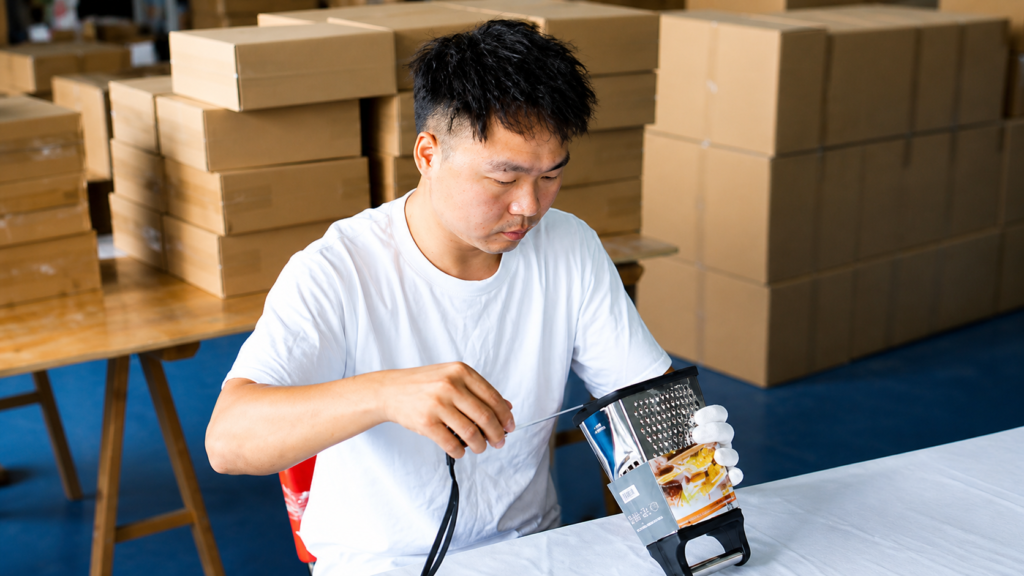
Quality control should not wait until customers complain. Sellers should define quality standards before production and inspect goods before shipping.
Quality control may include:
- Pre-production sample approval
- During production inspection
- Pre-shipment inspection
- Packaging check
- Label check
- Quantity check
- Function test
- Carton condition review
Fyllhub's China inspection support can help sellers check products before they move to Amazon, ecommerce fulfillment or regional warehouses. Inspection is especially important for new suppliers, custom packaging, electronics, bundles, cosmetics, fragile products and high-value orders.
Manufacturing for Amazon FBA
Amazon sellers need to think about FBA requirements before production is complete. Products may need FNSKU labels, carton labels, poly bags, warning labels, bundle labels or specific packaging.
If suppliers are not familiar with Amazon requirements, sellers may use Amazon FBA prep service in China. This can include labeling, repacking, carton checks, bundle prep and shipment readiness review.
For Amazon manufacturing projects, sellers should confirm:
- Product barcode strategy
- FNSKU label placement
- Packaging durability
- Carton weight
- Carton dimensions
- Units per carton
- Bundle or multipack rules
- Amazon marketplace destination
- Inspection checklist
This planning reduces receiving problems after inventory arrives at Amazon.
Manufacturing for Shopify and WooCommerce Brands
Direct-to-consumer brands may have different requirements from Amazon sellers. A Shopify or WooCommerce product often needs stronger brand presentation, clearer shipping communication and packaging that supports repeat purchase.
For ecommerce fulfillment, sellers should prepare:
- SKU names
- Variant structure
- Product weights
- Product dimensions
- Packaging rules
- Insert requirements
- Shipping method expectations
- Return or replacement policy
Products can move from production into China ecommerce fulfillment so orders can be shipped directly to customers or transferred to regional warehouses.
Supplier Consolidation
Some products require several suppliers. One supplier may make the main item, another may make packaging, another may print inserts and another may produce accessories. Without consolidation, the seller may need to coordinate every component separately.
Supplier consolidation brings components into one China warehouse or fulfillment center. This helps with:
- Quantity checks
- Accessory matching
- Kitting
- Packaging assembly
- FBA prep
- Shipping coordination
- Inventory control
For ecommerce brands, consolidation is often the step that turns manufacturing pieces into a finished sellable product.
Shipping and Fulfillment After Manufacturing
Manufacturing is not complete until inventory can reach the sales channel or customer. Sellers should plan shipping before production finishes.
Common post-production routes include:
- Amazon FBA shipping
- Direct ecommerce fulfillment from China
- Bulk freight to a US, UK, Canada or Australia warehouse
- DDP shipping
- Crowdfunding reward fulfillment
- Wholesale shipment
- Sample or influencer kit dispatch
The best route depends on product size, destination, order volume, delivery promise and inventory strategy. A China freight forwarder can help compare freight options, while a fulfillment partner can support storage and order processing.
Inventory Strategy for Manufactured Products
New ecommerce brands should avoid producing too much inventory before demand is proven. A practical approach is to start with a controlled batch, test sales and scale based on data.
Inventory planning should consider:
- Production lead time
- Sales velocity
- Seasonal demand
- Storage cost
- Freight cost
- Cash flow
- Reorder point
- Supplier reliability
- Packaging material stock
- Regional warehouse needs
Some products may stay in China for international orders and testing. Bestsellers may move to regional warehouses for faster delivery.
Common China Manufacturing Mistakes
Choosing only by unit price
The cheapest quote may use weaker materials, poorer packaging or less reliable quality control. Compare total risk, not only unit cost.
Skipping samples
Samples are essential for understanding product quality. A large order should not be placed before sample review.
Not documenting specifications
Verbal or chat-based instructions are easy to misunderstand. Use a clear specification sheet.
Paying before inspection
Final payment should be connected to quality checks when possible. Paying too early reduces leverage.
Ignoring packaging until the end
Packaging affects production, shipping, customer experience and fulfillment. Plan it early.
Not planning fulfillment
Manufacturing without a shipping and fulfillment plan can lead to storage problems, high freight costs and delayed launches.
How to Choose a China Manufacturing Partner
The right partner should match the product category, quality standard, sales channel and growth plan.
Ask these questions:
- Have you made similar products before?
- Can you provide samples?
- What customization options are available?
- What is the MOQ?
- What are the payment terms?
- What is the production lead time?
- Can you support packaging customization?
- Can you provide carton dimensions and weights?
- Can you deliver goods to a China warehouse?
- Are you willing to support third-party inspection?
- How are defects handled?
For brands that need sourcing, manufacturing coordination, inspection and fulfillment, a partner such as Fyllhub can help connect these steps.
How Fyllhub Helps With China Manufacturing
Fyllhub helps ecommerce brands manage China manufacturing workflows from supplier coordination to fulfillment. This is useful for sellers that want more support than a factory alone can provide.
Fyllhub can help with:
- Supplier sourcing support
- Sample coordination
- Manufacturing communication
- Packaging coordination
- China inspection
- Supplier receiving
- Warehouse storage
- Kitting and assembly
- Amazon FBA prep
- Ecommerce fulfillment
- Freight forwarding coordination
- DDP shipping options where suitable
This gives brands a more connected workflow. Instead of managing sourcing, inspection, storage and shipping separately, sellers can move products through a cleaner China-side process.
If your ecommerce brand needs help with China manufacturing, sourcing, packaging or fulfillment, you can request a custom quote from Fyllhub. Share your product idea, target category, order quantity, packaging needs, quality requirements and target sales channels.
FAQ
What is China manufacturing for ecommerce?
China manufacturing for ecommerce means working with Chinese suppliers or factories to produce products for online sales channels such as Amazon, Shopify, WooCommerce, wholesale or crowdfunding.
How do I find a reliable manufacturer in China?
Compare suppliers by product specialization, samples, communication, MOQ, customization ability, quality control, production lead time and willingness to support inspection.
Do I need inspection for China manufacturing?
Yes, inspection is strongly recommended before shipment. It helps catch defects, packaging problems, wrong labels, missing accessories and quantity issues before products leave China.
Can Fyllhub help with China manufacturing?
Fyllhub can help with supplier sourcing support, sample coordination, inspection, packaging coordination, warehouse storage, FBA prep, ecommerce fulfillment and shipping from China.
Is China manufacturing only for large brands?
No. Smaller ecommerce brands can start with controlled batches, sample testing and lower-risk inventory planning before scaling production.
How does manufacturing connect with fulfillment?
After production, inventory may need inspection, packaging, storage, labeling, kitting, Amazon FBA prep, direct fulfillment or freight forwarding. Planning fulfillment early prevents delays.
How do I start a China manufacturing project?
Prepare your product concept, specifications, target quantity, packaging idea, quality requirements, sales channel and shipping destination. Then request a quote from a China manufacturing partner.
Final Thoughts
China Manufacturing can help ecommerce brands build differentiated products, but success depends on more than finding a supplier. Brands need clear specifications, samples, packaging planning, quality control and a fulfillment strategy.
The strongest workflow connects manufacturing with inspection, storage, prep and shipping. This reduces surprises and gives the brand more control before products reach customers or Amazon.
Fyllhub can help ecommerce brands manage that China-side workflow. To plan your next product, request a quote from Fyllhub.





 Chat on WhatsApp