
Buy Wholesale from China: Supplier Vetting and Logistics
Buy Wholesale from China is a common sourcing strategy for ecommerce sellers, Amazon brands, retailers and distributors that want lower unit costs, broader product options and direct access to Chinese suppliers. It can be profitable, but wholesale buying is not only about finding a cheap product. Sellers also need to vet suppliers, confirm product quality, understand MOQ, inspect goods, organize warehouse storage and plan freight before inventory reaches customers.
Many sellers start by searching marketplaces, contacting factories or asking for quotes. The challenge begins after the first supplier replies. Several suppliers may offer different materials, packaging, prices, lead times and MOQ. A low quote may look attractive but hide poor quality, unclear specifications or weak logistics support. A better wholesale process compares total landed cost and risk, not only unit price.
This guide explains how to buy wholesale from China, how to compare suppliers, what to check before payment, how inspection and warehousing fit into the process, and how Fyllhub can support buy wholesale from China workflows from supplier sourcing to global shipping.
What Does Buying Wholesale from China Mean?
Buying wholesale from China means purchasing products in bulk from Chinese suppliers, manufacturers, trading companies or distributors for resale. The products may be generic, customized, private label, bundled or prepared for Amazon FBA, Shopify, WooCommerce, retail or wholesale distribution.
The process can include:
- Product research
- Supplier search
- Quote comparison
- Sample order
- MOQ negotiation
- Product specification confirmation
- Bulk order placement
- Product inspection
- Packaging checks
- Warehouse receiving
- Supplier consolidation
- Freight forwarding
- Ecommerce fulfillment
- Amazon FBA prep
Wholesale buying is usually more structured than one-off sample buying. The seller is committing money to inventory, so quality control and logistics planning matter.
Why Ecommerce Sellers Buy Wholesale from China
China has broad supplier networks across many ecommerce categories. Sellers use China wholesale buying because it can support product variety, lower unit costs and flexible sourcing.
Broad product selection
Sellers can find wholesale products across categories such as home goods, electronics accessories, toys, packaging, beauty tools, pet products, apparel accessories, kitchen items, outdoor products and promotional products.
Lower unit cost at volume
Wholesale orders usually reduce unit cost compared with buying one product at a time. However, sellers must include freight, duties, inspection, storage and fulfillment costs before deciding whether the product is profitable.
Supplier customization options
Some wholesale suppliers can support logo placement, packaging changes, product colors, bundle components or private label options. This helps ecommerce brands move beyond generic resale.
Inventory control
Buying wholesale gives sellers more inventory control than supplier dropshipping. The seller can inspect goods, store inventory, prepare packaging and choose fulfillment routes.
Wholesale Supplier Types in China
Not every supplier is the same. Understanding supplier type helps sellers compare quotes and expectations.
Manufacturers
Manufacturers produce products directly. They may offer better customization and lower pricing at higher volumes, but they may also have higher MOQ and less flexibility for small orders.
Trading companies
Trading companies source products from factories and resell them. They may offer broader product options and easier communication, but pricing can be higher. Some trading companies are useful when sellers need several related products from different factories.
Wholesale markets
Wholesale markets can offer many products in one place, especially for accessories, small goods, apparel, home products and general merchandise. They can be useful for product discovery but still require quality checks and logistics planning.
Online suppliers
Alibaba and similar platforms make it easy to find suppliers, but sellers need to verify the supplier before placing bulk orders. Online listings can be incomplete or overly polished.
How to Vet Wholesale Suppliers
Supplier vetting reduces the risk of poor products, missed deadlines and unclear communication.
Check:
- Business type
- Product specialization
- Years in operation
- Response quality
- Sample availability
- MOQ flexibility
- Custom packaging ability
- Export experience
- Quality control process
- Production lead time
- Payment terms
- Willingness to support inspection
- Ability to deliver to a China warehouse
Ask detailed questions before ordering. A reliable supplier should answer clearly and provide product details, carton information and realistic timelines. If communication is vague before payment, it may become worse after production starts.
Product Samples Before Bulk Orders
Samples help sellers evaluate quality before committing to wholesale inventory. A sample should be checked like a customer would check the product.
Review:
- Material
- Appearance
- Function
- Size
- Weight
- Color
- Packaging
- Accessories
- Instructions
- Durability
- Odor or finish
- Customer experience
One sample is not enough to prove mass production quality, but it helps sellers decide whether the supplier is worth further evaluation. If the sample is modified, document the final approved version before production.
MOQ and Pricing
MOQ means minimum order quantity. Wholesale suppliers often set MOQs based on material purchase, machine setup, packaging, labor and production efficiency. Sellers should understand MOQ before comparing prices.
When reviewing pricing, consider:
- Unit price
- MOQ
- Sample cost
- Packaging cost
- Logo or setup fees
- Domestic delivery cost
- Inspection cost
- Freight cost
- Duties and taxes
- Warehouse cost
- FBA prep or fulfillment cost
A product with a low unit price can become expensive after shipping and prep. Sellers should calculate landed cost per unit before committing.
Landed Cost and Profit Calculation
Before buying wholesale from China, sellers should calculate landed cost. Landed cost is the real cost of getting one unit ready to sell, not only the supplier price. It may include product cost, packaging, inspection, domestic China delivery, warehouse handling, freight, duties, taxes, FBA prep, storage and fulfillment.
For Amazon sellers, landed cost should be compared with Amazon referral fees, FBA fees, advertising cost and expected selling price. For Shopify or WooCommerce sellers, it should include payment fees, return risk, customer service cost and shipping subsidies. A product that looks profitable at the factory price may become weak after all logistics costs are included.
Sellers should also test different order quantities. A larger wholesale order may reduce unit cost and freight cost, but it also increases cash tied in inventory. A smaller first order may cost more per unit but reduce the risk of buying a product before demand is proven.
Packaging and Label Version Control
Wholesale products often change over time. A supplier may update packaging, cartons, inserts or labels without realizing the change affects Amazon, retail or ecommerce fulfillment. Sellers should keep version-controlled files for packaging artwork, barcode labels, FNSKU files, carton marks and inserts.
Before each reorder, confirm which version the supplier will use. This reduces the risk of old packaging, wrong barcodes, outdated claims or mismatched carton labels entering the warehouse.
Product Specifications
Before placing a wholesale order, sellers should document what they are buying. Product specifications help prevent supplier assumptions.
Specifications may include:
- Product name
- SKU
- Material
- Dimensions
- Color
- Weight
- Function
- Packaging
- Logo placement
- Label requirements
- Carton quantity
- Carton dimensions
- Defect standards
- Approved sample photos
This document becomes the reference for inspection, payment discussions and future reorders.
Payment Terms and Risk Control
Wholesale orders often require a deposit before production or shipment and a balance payment before goods leave the supplier. Sellers should connect payment timing with inspection and documentation.
A practical workflow is:
- Confirm sample.
- Approve specifications.
- Pay deposit.
- Monitor production.
- Inspect goods.
- Resolve major issues.
- Pay balance.
- Move goods to warehouse or freight route.
This reduces the risk of paying in full before quality is confirmed. For larger orders, sellers may use Trade Assurance, staged payments or third-party inspection reports.
China Inspection for Wholesale Orders
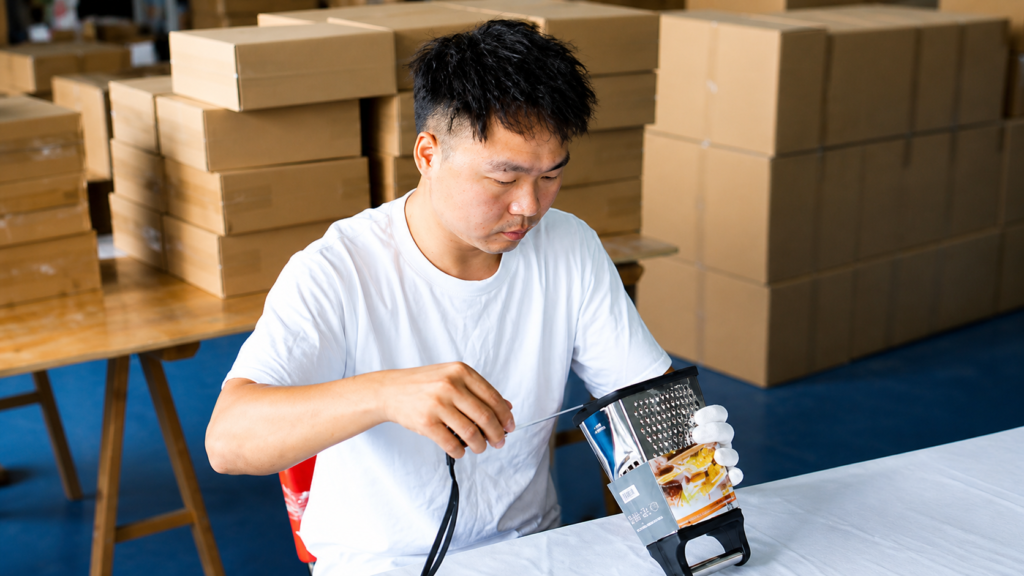
Inspection is essential when buying wholesale from China. A supplier may send good photos, but sellers still need independent checks before shipping inventory globally.
Inspection can verify:
- Product appearance
- Function
- Materials
- Quantity
- Packaging
- Accessories
- Label accuracy
- Carton condition
- Carton count
- Barcode or SKU details
Fyllhub's China inspection support can help sellers check goods before they enter Amazon FBA, ecommerce fulfillment or regional warehouses.
Warehouse Receiving and Supplier Consolidation
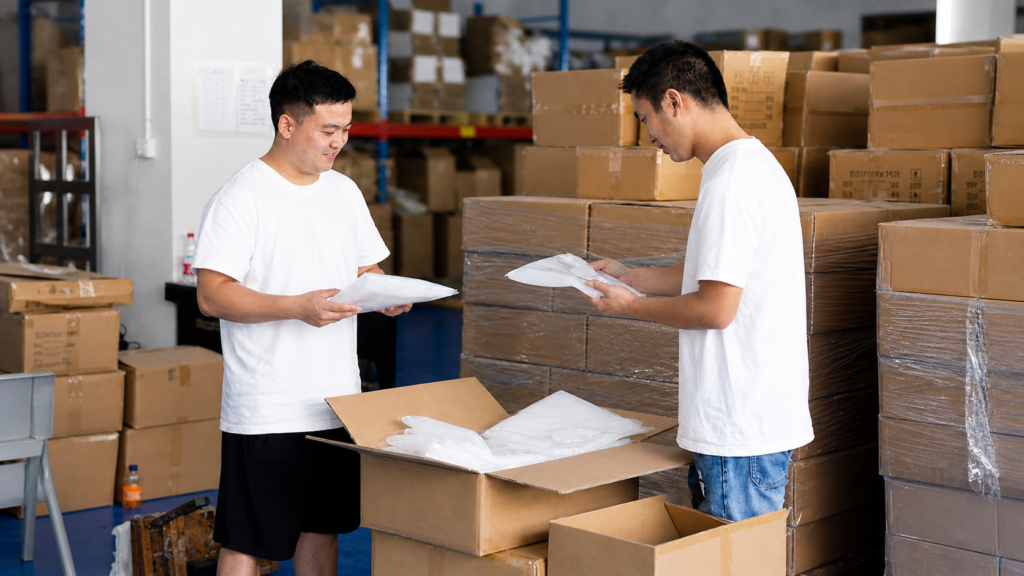
When sellers buy wholesale from several suppliers, a China warehouse can receive and consolidate inventory. This is useful when products need inspection, repacking, labeling, bundle assembly or shared freight.
China warehouse services can support:
- Supplier receiving
- Carton checks
- SKU organization
- Short-term storage
- Labeling
- Repacking
- Kitting
- Supplier consolidation
- Freight handoff
- Ecommerce fulfillment
Consolidation can reduce small-shipment waste and make freight planning cleaner.
Wholesale Buying for Amazon FBA
Amazon sellers need extra preparation when buying wholesale from China. Products may need FNSKU labels, carton labels, poly bags, bundle labels or shipment plan details before they are shipped to Amazon.
Before FBA shipment, sellers should confirm:
- Product barcode strategy
- FNSKU labels
- Carton labels
- Units per carton
- Carton dimensions
- Carton weight
- Packaging requirements
- Inspection checklist
- Amazon marketplace destination
- Freight route
Fyllhub's Amazon FBA prep service can help prepare wholesale inventory before shipping to Amazon.
Wholesale Buying for Shopify and WooCommerce
Shopify and WooCommerce sellers may buy wholesale inventory to fulfill direct customer orders. The product may stay in China for global fulfillment or move to a regional warehouse for faster local delivery.
For direct ecommerce fulfillment, sellers should prepare:
- SKU names
- Variant details
- Product weights
- Packaging rules
- Insert requirements
- Shipping countries
- Return policy
- Monthly order estimate
Wholesale buying gives sellers more control than supplier dropshipping, but it also requires inventory planning. The seller needs enough stock to fulfill orders without overbuying slow-moving products.
Shipping Wholesale Products from China
Shipping strategy depends on product size, volume, urgency and destination. Sellers may use express courier, air freight, sea freight, DDP shipping or bulk freight to a warehouse.
Shipping factors include:
- Product weight
- Carton dimensions
- Shipment volume
- Destination country
- Duties and taxes
- Delivery timeline
- Tracking needs
- Product restrictions
- Final delivery location
A China freight forwarder can help compare routes after products are inspected and carton data is confirmed.
Inventory Planning
Wholesale buying requires careful inventory planning. Buying too little can create stockouts. Buying too much can trap cash and increase storage cost.
Review:
- Sales forecast
- Production lead time
- Supplier reliability
- Freight timeline
- Storage cost
- Seasonal demand
- Reorder point
- Cash flow
- Product shelf life if relevant
- Variant split
New sellers may start with smaller wholesale orders and scale after demand is proven. Established sellers may use larger orders to reduce unit cost and freight cost.
Reorders and Supplier Performance
Wholesale buying becomes easier when sellers track supplier performance across repeat orders. A supplier may perform well on the first batch but change materials, packaging or lead time later. Sellers should keep records of defect rates, shipment delays, communication quality, packaging consistency and whether the supplier follows instructions.
For reorders, do not assume every detail remains the same. Confirm material, color, packaging, labels, carton quantity and price before production starts again. If the product is selling well, sellers should also plan reorder points early so production and freight timelines do not create stockouts.
Good supplier records help ecommerce brands decide which suppliers deserve larger orders and which should be replaced. They also help a sourcing or warehouse partner understand past issues before handling the next batch.
Common Mistakes When Buying Wholesale from China
Choosing only by lowest price
The cheapest supplier may use weaker materials, poor packaging or inconsistent quality. Compare total risk and landed cost.
Skipping samples
Samples help sellers evaluate quality and customer experience before a bulk order.
Not documenting specifications
Without written specifications, suppliers may make assumptions about materials, packaging and quality.
Paying in full before inspection
Final payment should be connected to quality checks when possible. Inspection gives sellers leverage before goods move.
Ignoring freight cost
Unit price alone does not determine profit. Freight, duties, storage and fulfillment can change the economics.
No warehouse plan
Wholesale inventory needs a destination. Decide whether goods go to Amazon, a China warehouse, a local 3PL, wholesale buyers or direct fulfillment.
How to Choose a Wholesale Buying Partner in China
A good partner should help sellers with more than supplier names. Wholesale buying often needs sourcing, sample coordination, inspection, warehousing and shipping.
Ask:
- Can you help find or compare suppliers?
- Can you coordinate samples?
- Can you inspect products before shipment?
- Can you receive goods from multiple suppliers?
- Can you store inventory in China?
- Can you prepare products for Amazon FBA?
- Can you support ecommerce fulfillment?
- Can you coordinate freight or DDP shipping?
- Can you provide inventory updates?
- Can you help with packaging or kitting?
The right partner should reduce operational risk between supplier quote and final delivery.
How Fyllhub Helps Sellers Buy Wholesale from China
Fyllhub helps ecommerce and Amazon sellers manage wholesale buying workflows from China. This can include sourcing support, supplier receiving, inspection, warehousing, prep and shipping coordination.
Fyllhub can help with:
- Supplier sourcing support
- Sample coordination
- Product inspection
- Wholesale order receiving
- China warehouse storage
- Supplier consolidation
- Labeling and relabeling
- Repacking and kitting
- Amazon FBA prep
- Ecommerce order fulfillment
- Freight forwarding coordination
- DDP shipping options where suitable
This gives sellers a more controlled wholesale process. Instead of asking suppliers to handle every step, sellers can create a China-side workflow that checks products and prepares inventory before it moves globally.
If you want to buy wholesale from China for Amazon, Shopify, WooCommerce or retail distribution, you can request a custom quote from Fyllhub. Share your product category, supplier status, target quantity, inspection needs, packaging requirements and destination countries.
FAQ
What does it mean to buy wholesale from China?
Buying wholesale from China means purchasing products in bulk from Chinese suppliers, manufacturers or trading companies for resale through ecommerce, Amazon, retail or wholesale channels.
How do I find reliable wholesale suppliers in China?
Compare suppliers by specialization, samples, communication, MOQ, product quality, export experience, payment terms and willingness to support inspection.
Should I inspect wholesale products before shipping?
Yes. Inspection helps catch defects, wrong quantities, packaging issues, missing accessories and label problems before goods leave China.
Can Fyllhub help me buy wholesale from China?
Fyllhub can help with sourcing support, sample coordination, supplier receiving, inspection, warehouse storage, FBA prep, fulfillment and shipping coordination.
What is MOQ when buying wholesale?
MOQ means minimum order quantity. It is the smallest order size a supplier is willing to produce or sell at wholesale terms.
How do I ship wholesale products from China?
Shipping options include express, air freight, sea freight, DDP shipping or bulk freight to Amazon, a local warehouse or customers. The best route depends on product size, urgency and destination.
How do I start a wholesale buying project?
Prepare your product category, target quantity, budget, packaging needs, destination, quality standards and preferred sales channel. Then request a quote from a China wholesale support partner.
Final Thoughts
Buying wholesale from China can help ecommerce sellers access broader products and better unit costs, but it requires a careful process. Supplier vetting, sample review, specifications, inspection, warehousing and freight planning all affect profitability.
The strongest wholesale workflow checks products before shipment and connects buying with logistics. That means sellers should plan where inventory goes after production, how it will be inspected, how it will be packed and how it will ship.
Fyllhub can help sellers build that workflow from China supplier to global destination. To plan your wholesale buying project, request a quote from Fyllhub.




 Chat on WhatsApp